July 8: The Importance of Belonging
how society shapes the way children and young people see themselves, each other and the world they live in
As parents, we all want our children to feel happy, confident and safe. We hope they find good friends, enjoy school, discover where they fit in and grow up knowing they are valued for who they are. At the heart of all those hopes is the feeling of belonging.
Belonging isn't just about being included in a game or invited to a party. It's the quiet reassurance that you are accepted, respected and appreciated without having to change who you are. When children feel that they truly belong, they're more likely to develop confidence, build healthy relationships and navigate life's challenges with resilience.
Today let’s explore why belonging is one of the strongest protective factors for children's mental health and how, as parents, we can help create spaces where every child feels seen, valued and accepted.
Read more on Cultural Calendar Club…
🔔 coming up on The Work Edit:
Rats, carrots and sport!
coming up on Cultural Calendar Club
12 Months of live, inspiring, entertaining talks events, made financially accessible for all organisations
Not yet a member of Cultural Calendar Club? Join today or Contact Us.
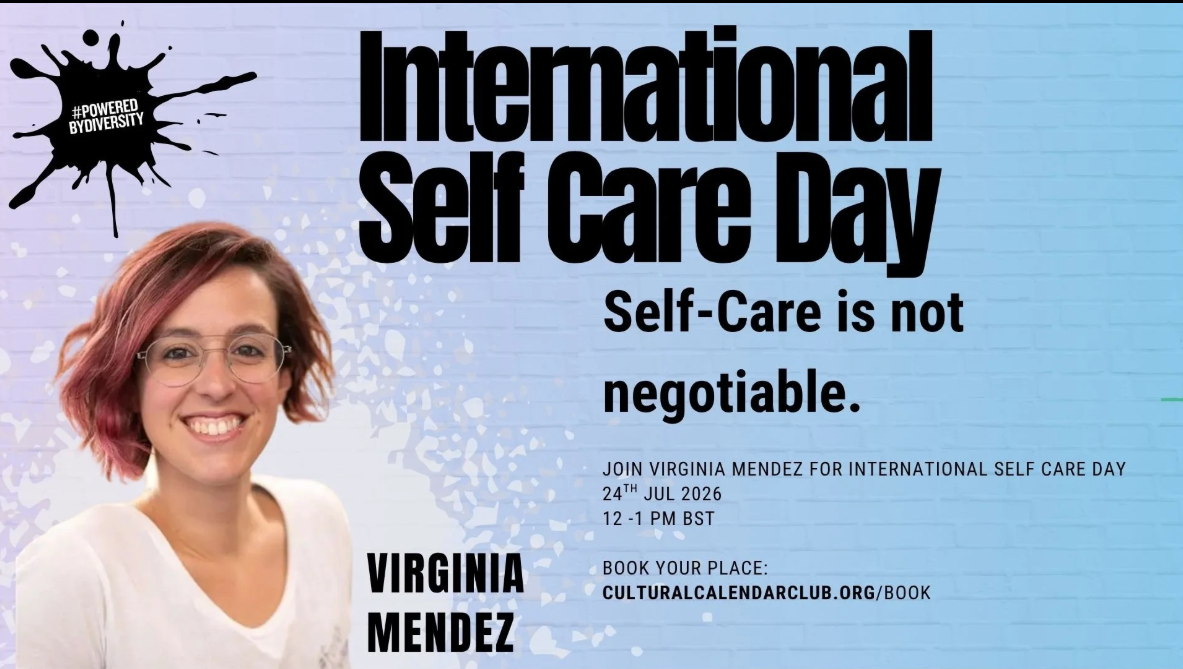
International Self Care Day: Self‑Care is not negotiable.
Friday 24 July 2026
12:00 13:00
Not yet a member of Cultural Calendar Club? Join today or Contact Us.
In this 60‑minute webinar, we’ll dismantle the myth that self‑care is a luxury or an indulgence. Once again, we’ve been sold short-term, capitalist quick fixes—like scented candles and bubble baths—as if they could patch over much deeper, systemic problems.
Real self‑care is far less glamorous and far more powerful. It’s about boundaries. About rest. About tuning into our natural rhythms and creating the space to truly know ourselves.
We often frame self‑care as something we do for others—role‑modelling healthier behaviours, being better colleagues, parents, partners. And yes, that matters. But the deeper truth is this: we don’t need to earn rest or justify our wellbeing. We need to normalise self-love without attaching it to usefulness.
Self‑care is a political act. It's about reclaiming what we all deserve—without guilt—and refusing to burn out while trying to fix the very systems that make it so hard to care for ourselves in the first place. Because access to self-care isn’t equal, and recognising that is part of the work.