July 24: Protecting Children From A Difficult World
how society shapes the way children and young people see themselves, each other and the world they live in
As parents, one of our greatest instincts is to protect our children. We want to shield them from fear, uncertainty and sadness for as long as we can, preserving the carefree moments of childhood before the wider world inevitably comes into view. Yet today's children are growing up in a time when difficult news is almost impossible to avoid. Whether it's through conversations at school, headlines on television, notifications on a parent's phone or videos shared online, they are often exposed to stories that can leave them feeling confused, worried or full of questions before we've even realised they've heard about them.
It can be difficult to know what to say.
Today we explore how we can approach these conversations with confidence, compassion and honesty, helping children make sense of difficult events in ways that are appropriate for their age and emotional development. Rather than protecting them by avoiding the conversation altogether, we can protect them by making sure they know we are the trusted person they turn to when the world feels confusing.
Because while our children won't always remember the bad news, they will remember who sat beside them, who listened, reassured them and helped them understand.
Read more on Cultural Calendar Club…
🔔 coming up on The Work Edit:
Rats, carrots and sport!
coming up on Cultural Calendar Club
12 Months of live, inspiring, entertaining talks events, made financially accessible for all organisations
Not yet a member of Cultural Calendar Club? Join today or Contact Us.
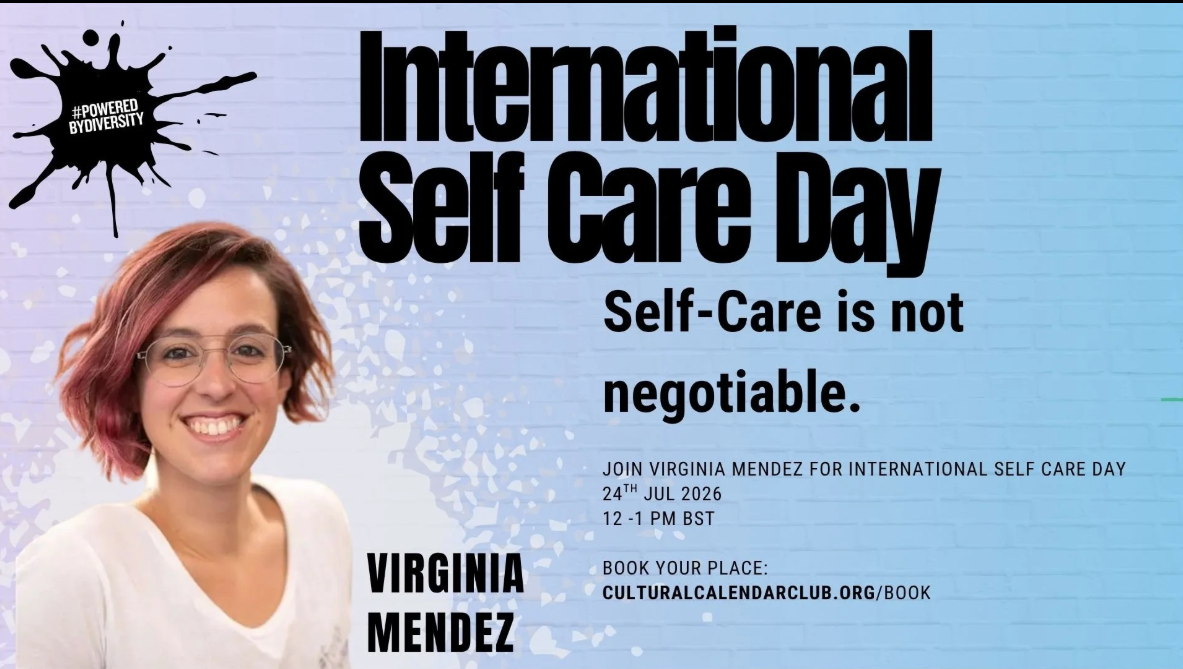
International Self Care Day: Self‑Care is not negotiable.
Friday 24 July 2026
12:00 13:00
Not yet a member of Cultural Calendar Club? Join today or Contact Us.
In this 60‑minute webinar, we’ll dismantle the myth that self‑care is a luxury or an indulgence. Once again, we’ve been sold short-term, capitalist quick fixes—like scented candles and bubble baths—as if they could patch over much deeper, systemic problems.
Real self‑care is far less glamorous and far more powerful. It’s about boundaries. About rest. About tuning into our natural rhythms and creating the space to truly know ourselves.
We often frame self‑care as something we do for others—role‑modelling healthier behaviours, being better colleagues, parents, partners. And yes, that matters. But the deeper truth is this: we don’t need to earn rest or justify our wellbeing. We need to normalise self-love without attaching it to usefulness.
Self‑care is a political act. It's about reclaiming what we all deserve—without guilt—and refusing to burn out while trying to fix the very systems that make it so hard to care for ourselves in the first place. Because access to self-care isn’t equal, and recognising that is part of the work.