This Week, edited: less noise, more reframing
This week…
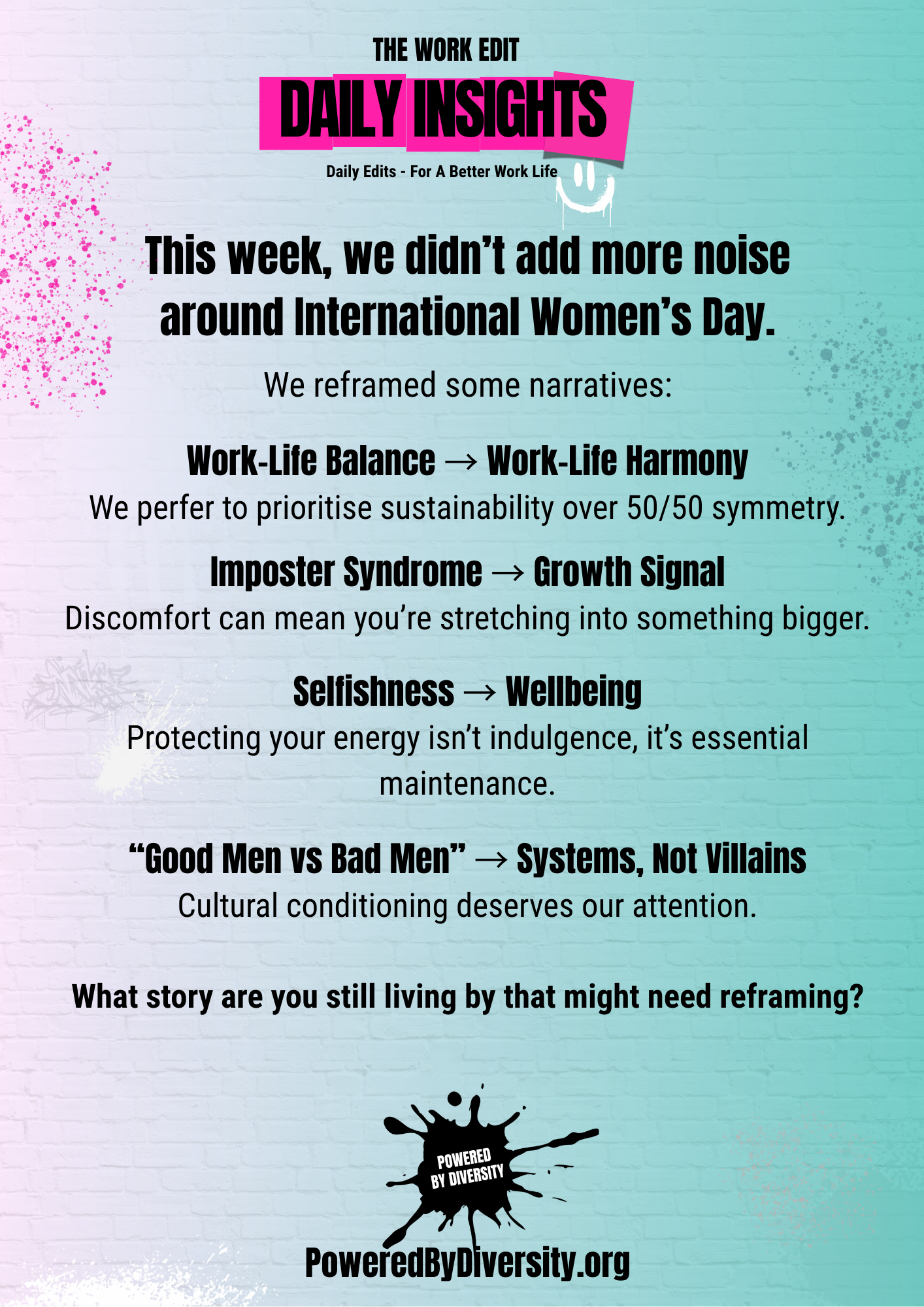
This week, we flexed our power to reframe some tired old stories that weren’t serving us anymore.
We revisited the idea of work–life balance and questioned whether harmony is a more honest, sustainable goal (it was).
We challenged the discomfort around prioritising wellbeing and asked whether we’d been too quick to label sustainability as selfishness (we had).
We reframed imposter syndrome as a signal of growth rather than inadequacy (still feeling the feeling, just framing it differently in our heads).
And we examined the comforting but limiting narrative of “good men vs bad men,” shifting the focus instead to the systems and scripts that shape behaviour long before adulthood (as mums of boys ourselves, this was scary but essential).
Across some quite different topics, a common thread emerged:
What became clear is that the words we inherit really do shape the standards we live by.
When we say “balance,” we imply equality at all times.
When we say “selfish,” we discourage essential maintenance.
When we say “imposter,” we question our own belonging.
When we frame harm as villainy, we avoid examining the very systems that create it.
These words (and the narratives that we build them into) really do influence how we show up at work, how we lead, how we parent and how we hold ourselves accountable. And often, we follow them without ever consciously agreeing to them! (Argh!)
The key insight this week for us was:
Annoying and frustrating as it may be, our key insight was the pesky power that something as seemingly innocent as words have to shape our lives. Yep, the key insight was that culture really does change and evolve when language does.
Thsi week’s reframing became about recognising that many of the pressures we feel and many of the problems we face are reinforced by the words and stories we continue to repeat.
When we edit our narratives, even slightly, we’re making change.
🔔 coming up on The Work Edit:
Next week, starts with International Women’s Day - join us at our live event (details below)
coming up on Cultural Calendar Club
12 Months of live, inspiring, entertaining talks events, made financially accessible for all organisations
Not yet a member of Cultural Calendar Club? Join today or Contact Us.
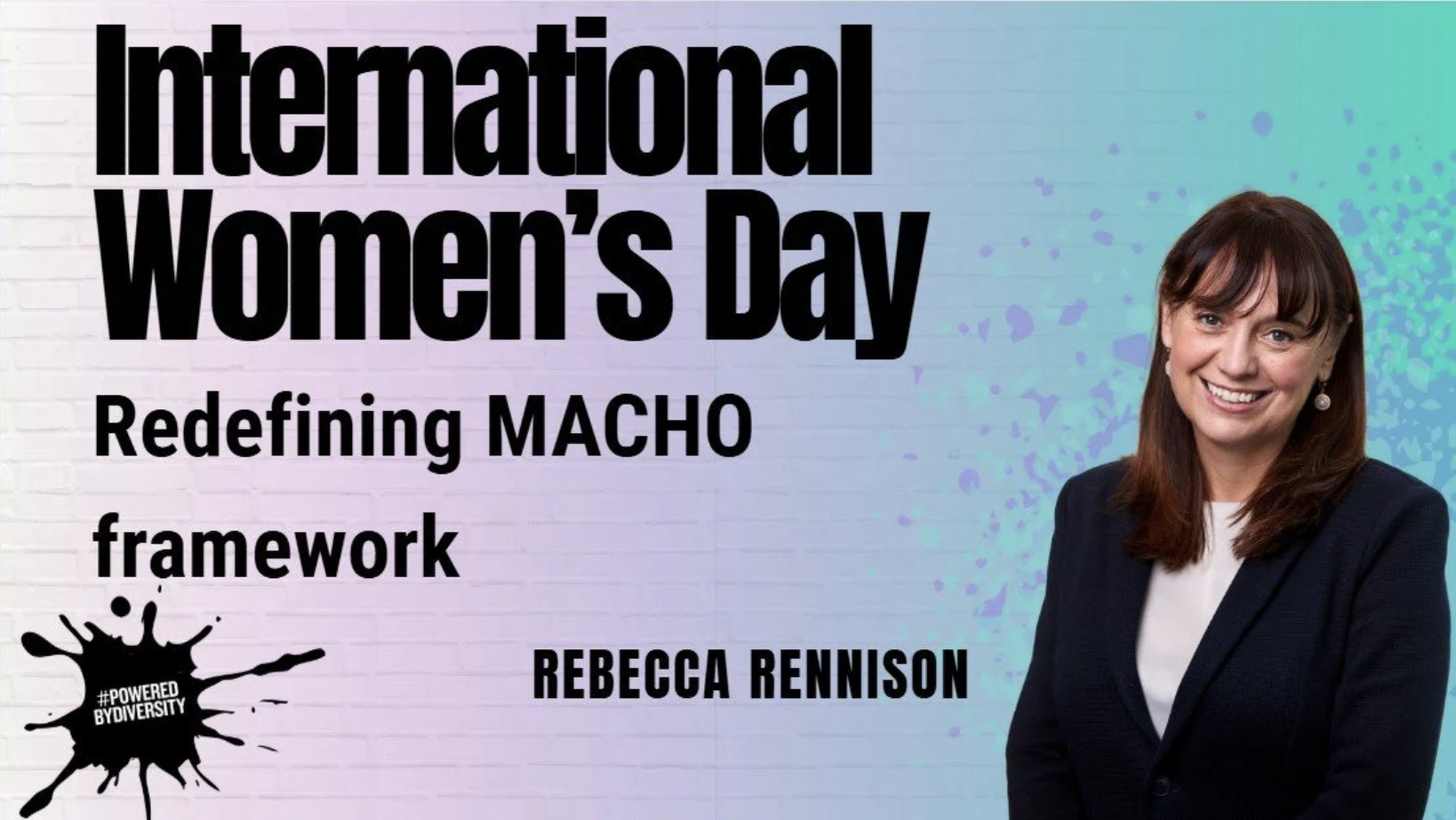
International women’s day
Redefining macho
Monday 9 March 2026
12:00 13:00
Not yet a member of Cultural Calendar Club? Join today or Contact Us.
Rebecca created the “Redefining MACHO” framework to encourage better male allyship and foster a more diverse and inclusive workplace. This framework consists of five simple, actionable steps that everyone can implement today to enhance DE&I within their organisations and the broader business community.
M = Meaningful Mentor
A = Amplify Awareness
C = Capture Confidence
H = Harmony with Home
O = Orchestrate Opportunities
Rebecca will discuss how this framework can unlock numerous small actions that collectively support the development of diverse teams, actively champion equity, and ensure that inclusion is experienced by all. She has conducted several “Redefining MACHO” workshops and events, gathering valuable feedback and real-life examples that provide a clear roadmap for change.
She will also share her “Work Life Harmony Handbook” and “Confidence Boosting Alphabet” to help SMASH Imposter Syndrome.
Want to feel more confident talking about topics like this at work?
the 2026 Diversity Ambassador certification is now open for booking! 🎉
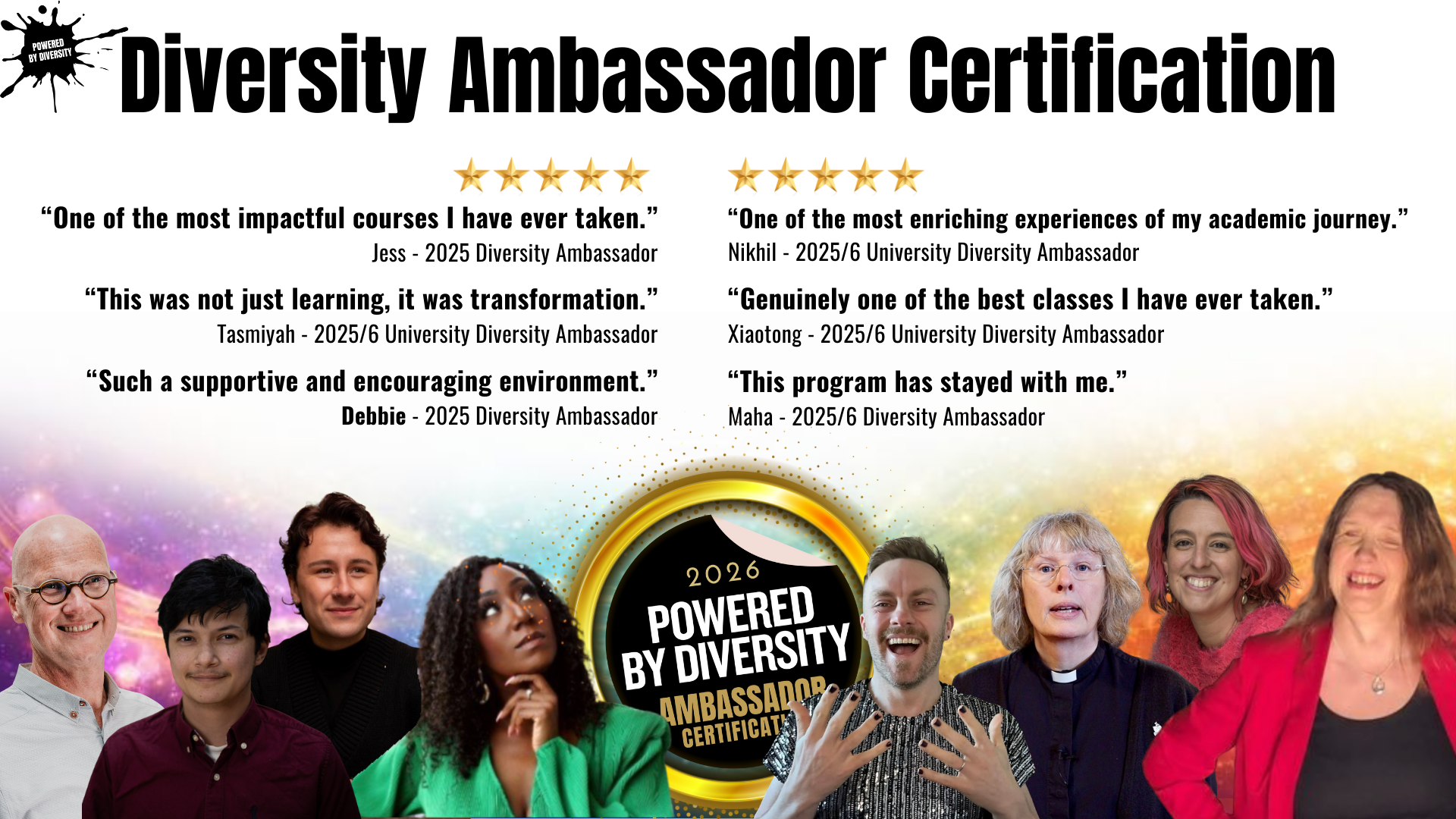
Six classes held via Teams | Every Thursday | from 12 - 1:30pm | From May 7th - June 11th
When are the Classes?
Thursday 7 May, 12-1:30 - Examining Beliefs - Foundations of EDI Thursday 14 May, 12-1:30 - Today's Sex & Equality Landscape
Thursday 21 May, 12-1:30 - Flags, Pronouns & Human Rights Thursday 28 May, 12-1:30 - Talkin' 'Bout my Generation
Thursday 4 Jun, 12-1:30 - Anti-ableist. Neuro inclusive. Access for all Thursday 11 Jun, 12-1:30 - Talking About Race Today
Click here to book your place! (please be aware the cohorts fill up quickly)
You can find out more here or Get in touch for a chat