The Parenting and Caring Load: The Invisible Inequality Facing Women and Girls
As we continue our focus on key issues affecting women and girls, we turn to something deeply embedded in everyday life; the parenting and caring load.
It’s rarely dramatic, most often it’s completely invisible but it has a huge impact on careers, finances, wellbeing and opportunity for women and girls.
While progress has been made in workplace equity, the reality in many homes tells a very different story. Women and girls still carry a disproportionate share of unpaid care; from childcare and eldercare to the mental load of running households.
If we are serious about gender equality, we must talk about care.
What Is the Parenting and Caring Load?
The parenting and caring load refers to both:
Practical responsibilities school runs, trying to make a variety of nutritious meals (this is a load we don’t talk about nearly enough), appointments and activities, bedtime routines - and actually parenting…
Emotional and mental labour planning, organising, anticipating needs, counselling, advising, checking, being expected to remember, well, everything)
This “invisible work” is often unrecognised but it is relentless.

Want to feel more confident talking about gender equality and other topics at work? Click here to book your place!
You can find out more here or Get in touch for a chat
According to the latest research from ONS, women perform approximately 60% more unpaid work than men. Women do 11 more hours of unpaid care per week than men. Research consistently shows women carry the majority of unpaid care responsibilities.
And this imbalance starts early, with girls often socialised into caregiving roles from a young age…
The Career Impact on Women
One of the most significant consequences of the unequal caring load is its impact on women’s careers.
leaving the workplace completely
Women are roughly twice as likely as men to leave their jobs due to caring responsibilities and a whopping 26% of women aged 16-64 are economically inactive due to looking after family or home, compared to just 7% of men.
Women in their 30s are 10 times more likely than men to be out of the labour market because of caring responsibilities (roughly 450,000 women in their 30s). Black women and women from Minoritised Ethnicities are 12 (TWELVE) times more likely than men to be out of the labour market due to caring commitments, with 1 in 5 BME women in their 30s affected.
juggling parenting and work
Nearly half of all working-age women perform unpaid care for a child, averaging 45 hours per week, compared to just 25% of men averaging 17 hours - economically speaking that’s £382bn worth of unpaid childcare that women are providing free of charge.
Yet I think we’d be hard pressed to find many women in those roles that feel ‘£382bn per year’ valued for the work they do.
Nearly half (47%) of working-age women provide unpaid childcare averaging 45 hours per week and that has macroeconomic consequences.
Economically speaking that’s £382bn worth of unpaid childcare that women are providing free of charge. This £382bn value of unpaid childcare highlights something critical: Women are subsidising the economy. The workforce continues because someone is raising the next generation — unpaid. GDP does not measure this labour, but it depends on it.
Meanwhile, women experience lower lifetime earnings (long-term earnings for mothers are estimated to be 45% lower compared to women who do not have children), slower career progression, smaller pensions and much higher financial vulnerability.
The problem isn’t motherhood — it’s that care work is economically invisible and unequally assigned.
elder care and caring for adults
An estimated 830,000 women are unable to work because they are caring for an adult. Among the 1.25 million people juggling childcare and elderly care or "Sandwich" Carers, 68% are women.
This is not a lack of ambition. It’s a lack of structural support.
(Data from PWC, What Women Want, The Fawcett Society, TUC, ONS, gov.uk and Centre for Progressive Policy)
The Impact on Girls
The caring imbalance doesn’t just affect adult women — it shapes girls’ expectations of themselves.
A survey by Theirworld found that during the pandemic, 66% of girls and women aged 14–24 were spending more time cooking for their families, compared to only 31% of boys in the same age group.
Research indicates that girls in the UK are more likely to have extensive caring roles, with 14% of young carers aged 5–17 in England reported as caring for four or more hours daily.
74% of parents in a Fawcett Society study said boys and girls are treated differently, with 70% of mothers and 60% of fathers agreeing this affects girls' and boys' development, such as boys being discouraged from expressing emotions and girls being pushed toward care roles.
Girls are often expected to help more at home, encouraged to be nurturing and accommodating and praised for being “helpful” rather than ambitious.
These early patterns influence confidence, shape career aspirations and sadly set a trend for what to expect in future division of labour in relationships.
If girls grow up assuming caregiving is primarily their responsibility, inequality simply repeats itself. facepalm
Why This Matters Now
In 2026, conversations about gender equality must include unpaid care.
Flexible working has expanded in many sectors — yet flexibility often becomes a “female” accommodation rather than a shared responsibility.
True equality means:
Recognising care as economic value
Encouraging boys and men to share responsibility fully
Normalising parental leave for all genders
Designing workplaces around life — not the other way around
Care is not a women’s issue. It’s a societal one.
A Call for Collective Responsibility
The parenting and caring load conversation that needs to be had is not about blame - it’s about harmony and shared responsibility.
If we want more women in leadership, greater financial equality, and healthier families, we must address the uneven distribution of care.
When care is shared, opportunity expands; for women, for girls, and for everyone.
🔔 coming up on The Work Edit:
Tomorrow, we’ll look at the state of the workplace for women on International Women’s Day (Week) 2026.
Want to feel more confident talking about gender equality and other topics at work?
coming up on Cultural Calendar Club
12 Months of live, inspiring, entertaining talks events, made financially accessible for all organisations
Not yet a member of Cultural Calendar Club? Join today or Contact Us.

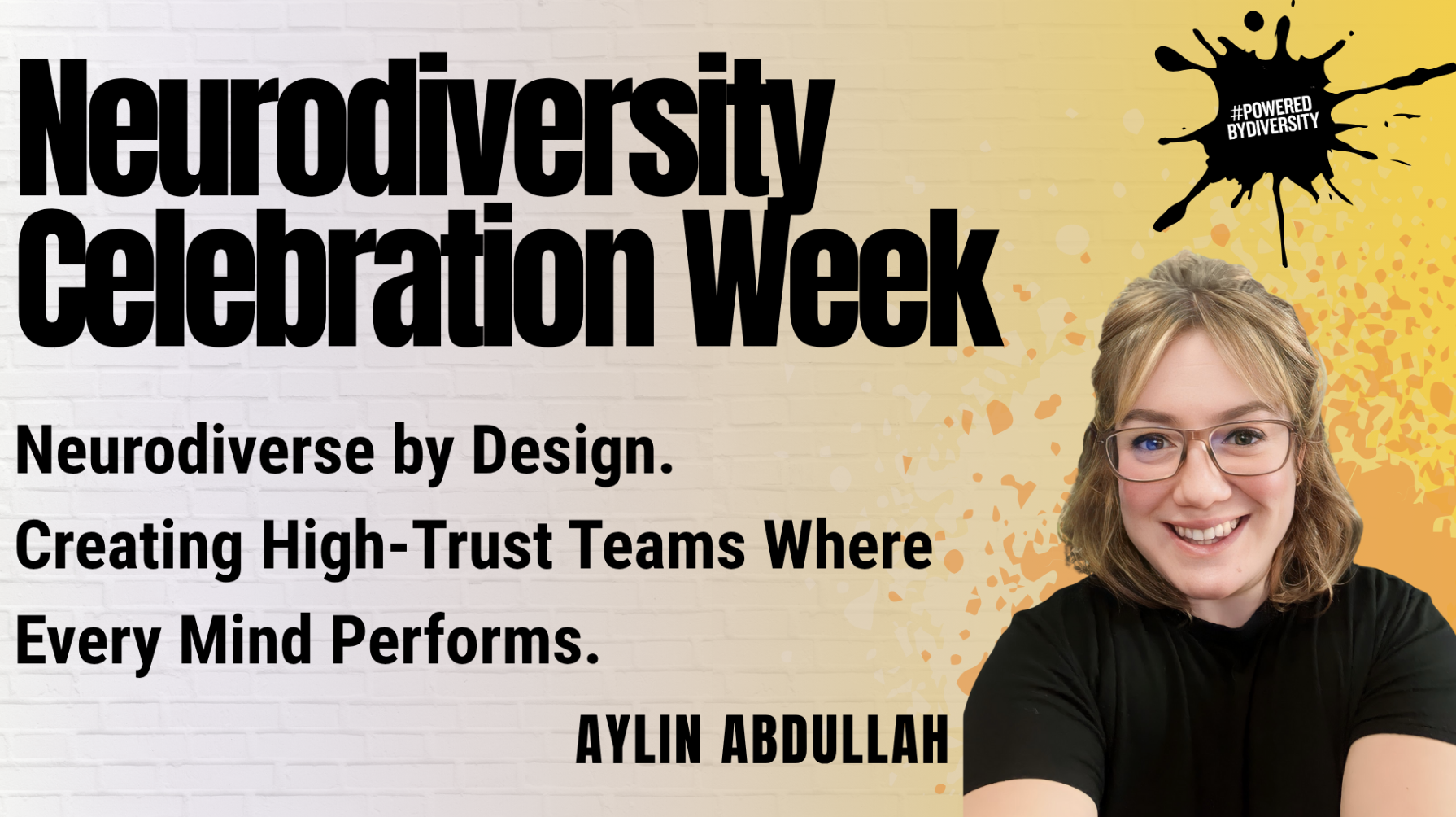
Neurodiversity Celebration Week
Neurodiverse by Design. Creating High-Trust Teams Where Every Mind Performs.
Friday 20 March 2026
12:00 13:00
Not yet a member of Cultural Calendar Club? Join today or Contact Us.
Join us to learn practical ways to flex control and create psychological safety while maintaining results.
Practise small, high-impact adjustments to meetings, feedback, and collaboration that enable a wider range of thinking and working styles.
You’ll leave with a simple “high trust for all brains” playbook and reflection prompts to start redesigning your own team environment the next day.
the 2026 Diversity Ambassador certification is now open for booking! 🎉
Six classes held via Teams | Every Thursday | from 12 - 1:30pm | From May 7th - June 11th
When are the Classes?
Thursday 7 May, 12-1:30 - Examining Beliefs - Foundations of EDI Thursday 14 May, 12-1:30 - Today's Sex & Equality Landscape
Thursday 21 May, 12-1:30 - Flags, Pronouns & Human Rights Thursday 28 May, 12-1:30 - Talkin' 'Bout my Generation
Thursday 4 Jun, 12-1:30 - Anti-ableist. Neuro inclusive. Access for all Thursday 11 Jun, 12-1:30 - Talking About Race Today
Click here to book your place! (please be aware the cohorts fill up quickly)
You can find out more here or Get in touch for a chat