Racism at work is often hidden, not absent.
We’ve been talking about avoidance and why difficult conversations are necessary part of maintaining wellbeing. Today marks the starts of Race Equality Week and we have a live event for Cultural Calendar Club members:
Race Equality Week: Beyond Talent: Decoding the Unspoken Rules for Racial Equity
Monday 9 February 2026
12:00 13:00
Not yet a member of Cultural Calendar Club? Join today or Contact Us.
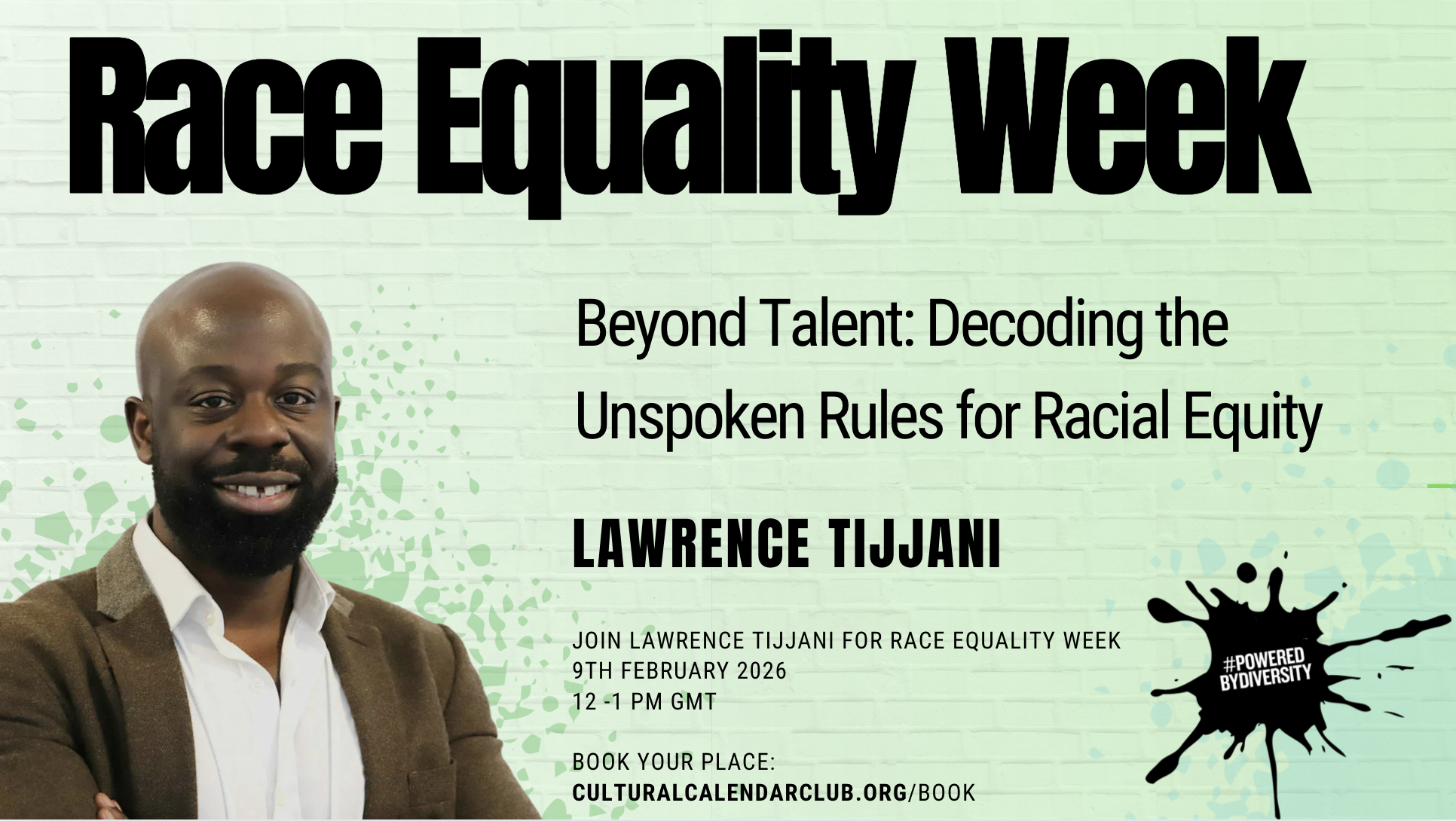
In today’s live session, former educator and social mobility advocate Lawrence Tijjani will explore the 'hidden curriculum' of the workplace that hinders progression. Attendees will learn practical strategies to move beyond mentorship to active sponsorship, create psychologically safe feedback loops, and build an inclusive culture where everyone has the tools to thrive, not just survive.
Why this matters → (30 sec read)
Last week, we explored how avoiding necessary conversations increases stress.
This week, we ask a harder question:
Who pays the price when conversations aren’t happening?
We rarely see exclusion at work demonstrated as overt behaviour these days. More often we see it operating through silence, assumptions, and unspoken rules. Who receives clear feedback? Who is “coached” and “supported”? And who is “corrected” and “managed”? Who is trusted to grow - and who is closely monitored?
When conversations about topics like race are avoided (and let’s be honest, in many workplaces they are), these patterns tend to quietly carry on unchallenged.
The result for those affected isn’t just ‘slower progression’ — it’s sustained psychological strain.
Because that uncertainty we’ve been discussing for the last few weeks, that lack of clarity, those conversations that aren’t happening, becomes constant.
Self-monitoring increases, work becomes so much heavier than it needs to be, and, as we’ve learnt over the past few weeks wellbeing takes the hit.
For leaders → (30 sec read)
Racism isn’t just something individuals experience.
It’s something our set-ups, our ways-of-working, our sets of “widely understood” (yet rarely openly talked about) rules and practices - and cultures - produce.
When expectations are informal - or inconsistently applied - those closest to power tend to be the ones who benefit.
Others are left trying to decode signals, reading between the lines, guessing what to do next, and carrying the mental load of ambiguity.
Avoiding conversations about race (or gender, disability, neurodivergence…) may feel safer in the moment, but over time, it embeds unfairness, and increases stress for those already trying to navigate being in the margins.
When we look at it this way, surely things like clear standards, consistent feedback, and open, honest conversations shouldn’t be optional extras.
Discussions about how to create environments where people get access to basic things like; clarity around rules and expectations - or access to a leader who is willing to talk about something as fundamental to a person as their race, shouldn’t be nice-to-haves.
They shouldn’t be something we only think about during one awareness week in the year.
These things are foundational to fairness and to wellbeing at work.
Bringing it all together
Across the past two weeks, one truth keeps resurfacing.
Stress at work doesn’t just come from workload or pace, it also comes from uncertainty.
Whether that’s not knowing how decisions are really made to what success looks like, or whether the same rules apply to everyone.
When conversations about diversity (for example, race) are actively avoided, that uncertainty isn’t neutral.
It lands unevenly.
For some, silence means freedom but for others, it means constant interpretation, self-monitoring, and second-guessing.
-isms (like racism, sexism) and -obias (like homophobia, transphobia) at work often hide in these gaps between what’s said and what’s assumed, between formal processes and informal power.
Clarity isn’t just kind, it’s protective.
And when clarity is missing, wellbeing quietly absorbs the cost.
Reflection
Where might unspoken rules or avoided conversations about topics like race be creating unnecessary stress?
🔔 coming up on The Work Edit:
Tomorrow we’ll explore the hidden curriculum of work.
we’ll See you at Lawrence’s live event TODAY AT 12:
Not yet a member of Cultural Calendar Club? Join today or Contact Us.
Cultural Calendar Club
Your calendar of live events for the year.
12 Months of live, inspiring, entertaining talks events, made financially accessible for all organisations
Not yet a member of Cultural Calendar Club? Join today or Contact Us.
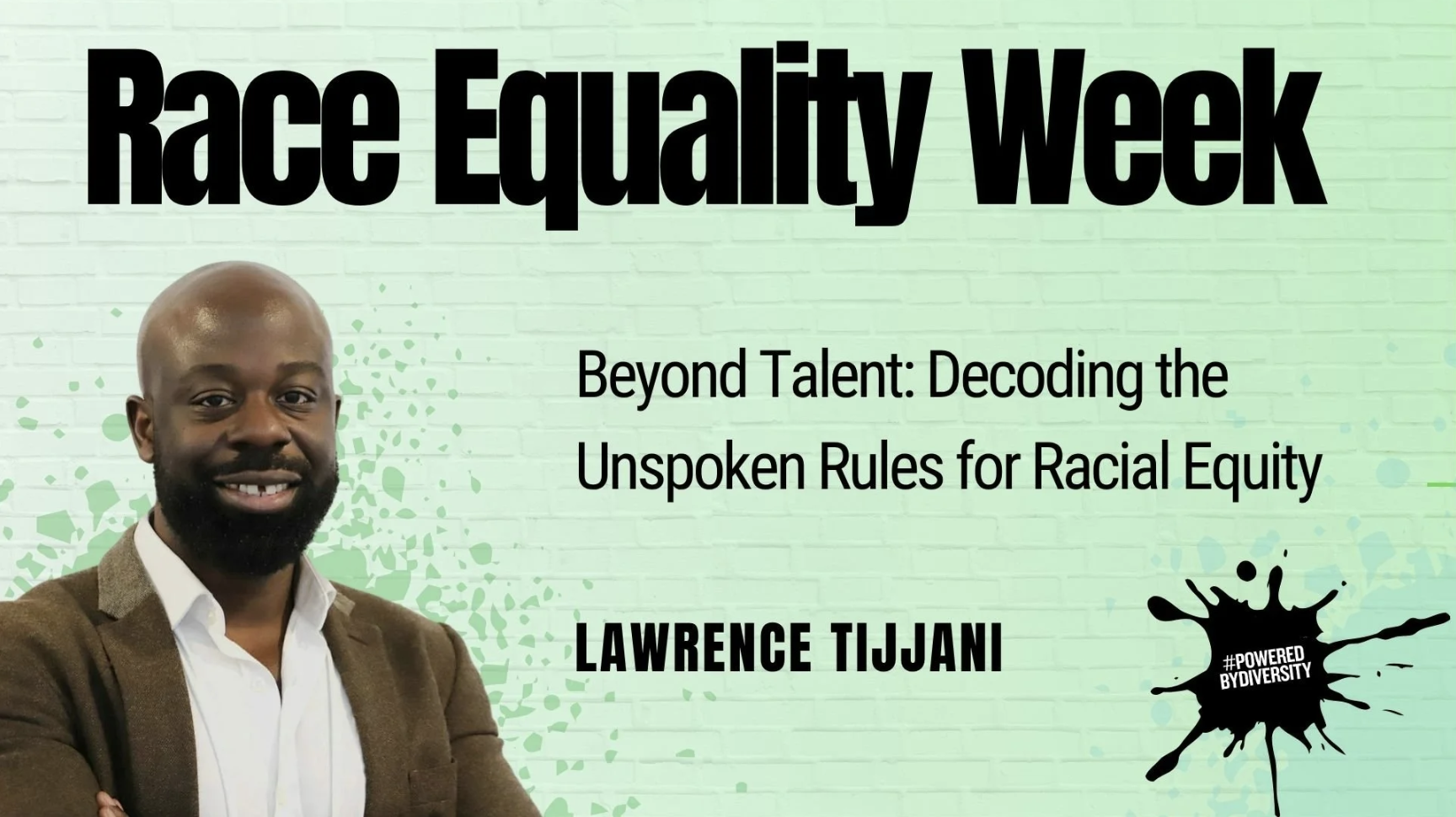
Race Equality Week
Beyond Talent: Decoding the Unspoken Rules for Racial Equity
Monday 9 February 2026
12:00 13:00
Not yet a member of Cultural Calendar Club? Join today or Contact Us.
We often say we want to hire the best talent, but what happens when that talent walks through the door?
For many individuals from Black and underrepresented communities, talent isn't enough to overcome the unspoken rules and hidden biases of the corporate environment.
In this session, former educator and social mobility advocate Lawrence Tijjani will explore the 'hidden curriculum' of the workplace that hinders progression. Attendees will learn practical strategies to move beyond mentorship to active sponsorship, create psychologically safe feedback loops, and build an inclusive culture where everyone has the tools to thrive, not just survive.