Talent isn’t the problem. The system is.
Why this matters → (30 sec read)
Most organisations say they value talent, fairness, and merit, yet outcomes tell a different story.
The truth is that progression often depends on access to information that isn’t written down.
Feedback that’s shared informally, advocacy that happens behind closed doors and standards that shift depending on who is being assessed.
This is the hidden curriculum of work that Lawrence Tijjani discussed in his live event yesterday.
When race shapes who has access to these unwritten rules, inequity isn’t accidental - it’s structural (this is what people mean when they talk about ‘dismantling systems’).
And for those navigating it, the cost isn’t just slower progression, it’s also sustained stress, constant vigilance, and emotional weight - and work.
For leaders → (30 sec read)
Racial inequity (unfairness) at work isn’t solved by hiring more “diverse talent” or asking people to be more confident or assertive or put themselves forward for more things.
It’s addressed by changing conditions.
That means examining:
How decisions are really made
Who gets coached versus corrected
Whose potential is assumed - and whose performance is questioned
Where advocacy shows up, and where it doesn’t
Race-aware leadership isn’t about blame, it’s actually about transparency and accuracy.
When leaders understand how unspoken rules operate, they can make them visible - and make outcomes fairer.
Bringing it all together
Across many workplaces, inequity persists not because people lack ability, but because access (e.g. to opportunity, to unwritten rules, to influence) is uneven.
Some employees are given context, cover, and second chances.
Others are expected to perform perfectly without ever being told how the game is played.
How many times have you heard someone in a position of power describing an up-and-coming employee as ‘a younger me’? The sentence in itself is harmless but thinking of it in the context of context, cover, second chances, informal advocacy or sponsorship - and it takes on a whole new meaning.
When race intersects with this hidden curriculum, wellbeing becomes collateral damage.
Constantly decoding unspoken expectations (or different expectations for different employees) takes energy.
Second-guessing intent drains focus.
Carrying uncertainty alone increases stress over time.
Race equality work that ignores systems will always fall short, because fairness isn’t built by fixing people - it’s built by fixing the rules (written and unwritten).
Reflection
Where in your organisation do unspoken rules shape who progresses, who is trusted, or who is sponsored?
What could change if those rules were made visible?
🔔 coming up on The Work Edit:
Tomorrow, we’ll look more closely at the human cost of unspoken rules.
Cultural Calendar Club
Your calendar of live events for the year.
12 Months of live, inspiring, entertaining talks events, made financially accessible for all organisations
Not yet a member of Cultural Calendar Club? Join today or Contact Us.
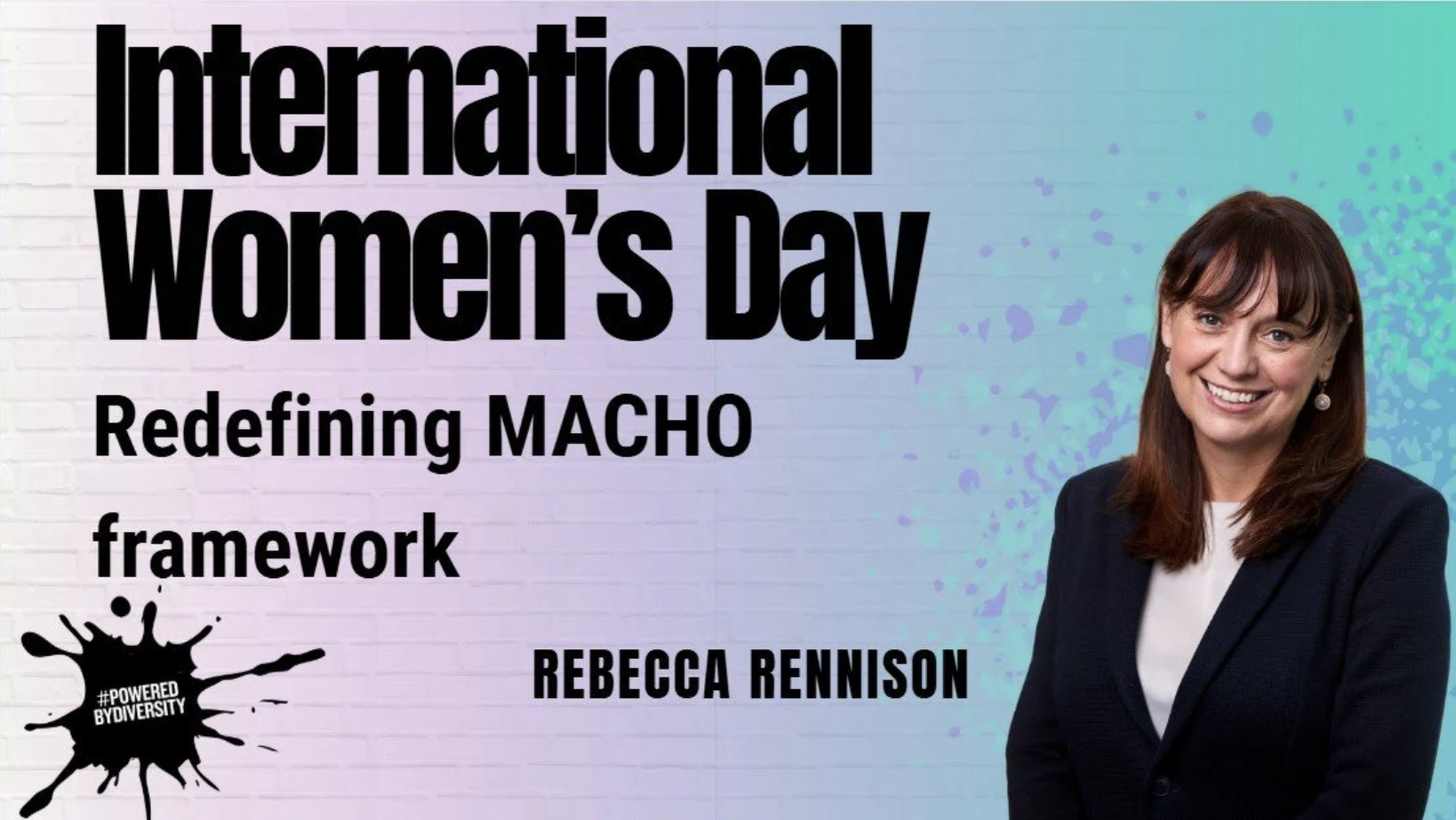
International women’s day
Redefining macho
Monday 9 March 2026
12:00 13:00
Not yet a member of Cultural Calendar Club? Join today or Contact Us.
Rebecca created the “Redefining MACHO” framework to encourage better male allyship and foster a more diverse and inclusive workplace. This framework consists of five simple, actionable steps that everyone can implement today to enhance DE&I within their organisations and the broader business community.
M = Meaningful Mentor
A = Amplify Awareness
C = Capture Confidence
H = Harmony with Home
O = Orchestrate Opportunities
Rebecca will discuss how this framework can unlock numerous small actions that collectively support the development of diverse teams, actively champion equity, and ensure that inclusion is experienced by all. She has conducted several “Redefining MACHO” workshops and events, gathering valuable feedback and real-life examples that provide a clear roadmap for change.
She will also share her “Work Life Harmony Handbook” and “Confidence Boosting Alphabet” to help SMASH Imposter Syndrome.