This Week, Edited: Are Necessary conversations a communication skill OR a wellbeing practice?
Why this matters → (30 sec read)
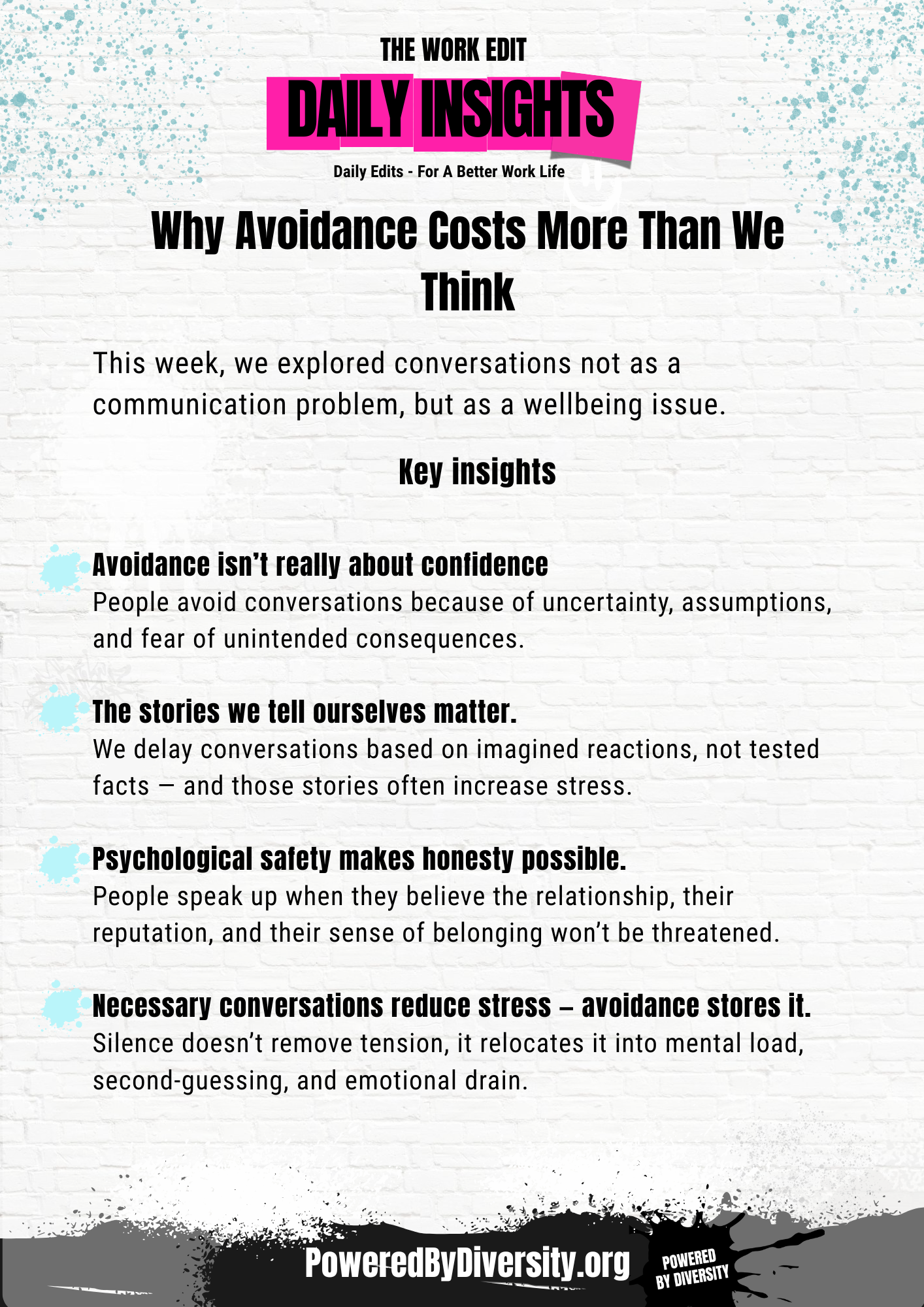
This week, we explored why necessary conversations feel so hard, even when we know they matter.
It’s not because people don’t care (usually far from it) and probably not because they lack confidence. We usually find it’s because uncertainty, assumptions, and risk make silence feel safer.
We looked at:
What became clear is this:
Avoiding a conversation might feel easier in the moment, but it often costs more in the long run.
Clarity doesn’t just reduce tension, it reduces the mental load of carrying things alone.
For Leaders → (30 sec read)
This week reinforced something many leaders sense but don’t always name.
When people avoid speaking up, it’s rarely a motivation issue, it’s usually a mental capacity and safety issue.
Necessary conversations become possible when:
Energy is protected
Assumptions are reduced
Intent is clear
People trust that honesty won’t backfire
Importantly this is all underpinned by the knowledge that you (their leader) have their back.
Avoidance can look like harmony, but it can hide growing friction.
Clear, timely conversations don’t just resolve issues, they protect wellbeing, trust, and momentum.
Stress, Burnout and Wellbeing Are One System
Across this week, one pattern kept emerging.
Stress doesn’t just come from what’s happening at work, it comes from what isn’t being said. Expectations that haven’t been communicated (especially when those expectations have not been met), unaddressed tension, delayed feedback, conversations rehearsed endlessly in someone’s head.
We know now that avoidance doesn’t remove these pressures - it just stores them.
That’s why necessary conversations matter so much - not as a leadership “skill”, but as a way of reducing unnecessary stress.
When clarity replaces silence, energy can return, relationships can stabilise and work can feel orders of magnitude lighter.
This is where wellbeing and communication meet.
reflection
What conversation will you have next?
🔔 coming up on The Work Edit:
Next week, we’ll explore this foundation with an equity lens; who gets access to clarity, feedback and sponsorship? — and who’s expected to navigate unspoken rules without support?
🔔 Get Daily Insights to your inbox
Cultural Calendar Club
Your calendar of live events for the year.
join today for 12 Months of live, inspiring, entertaining talks events, made financially accessible for all organisations
Not yet a member of Cultural Calendar Club? Join today or Contact Us.
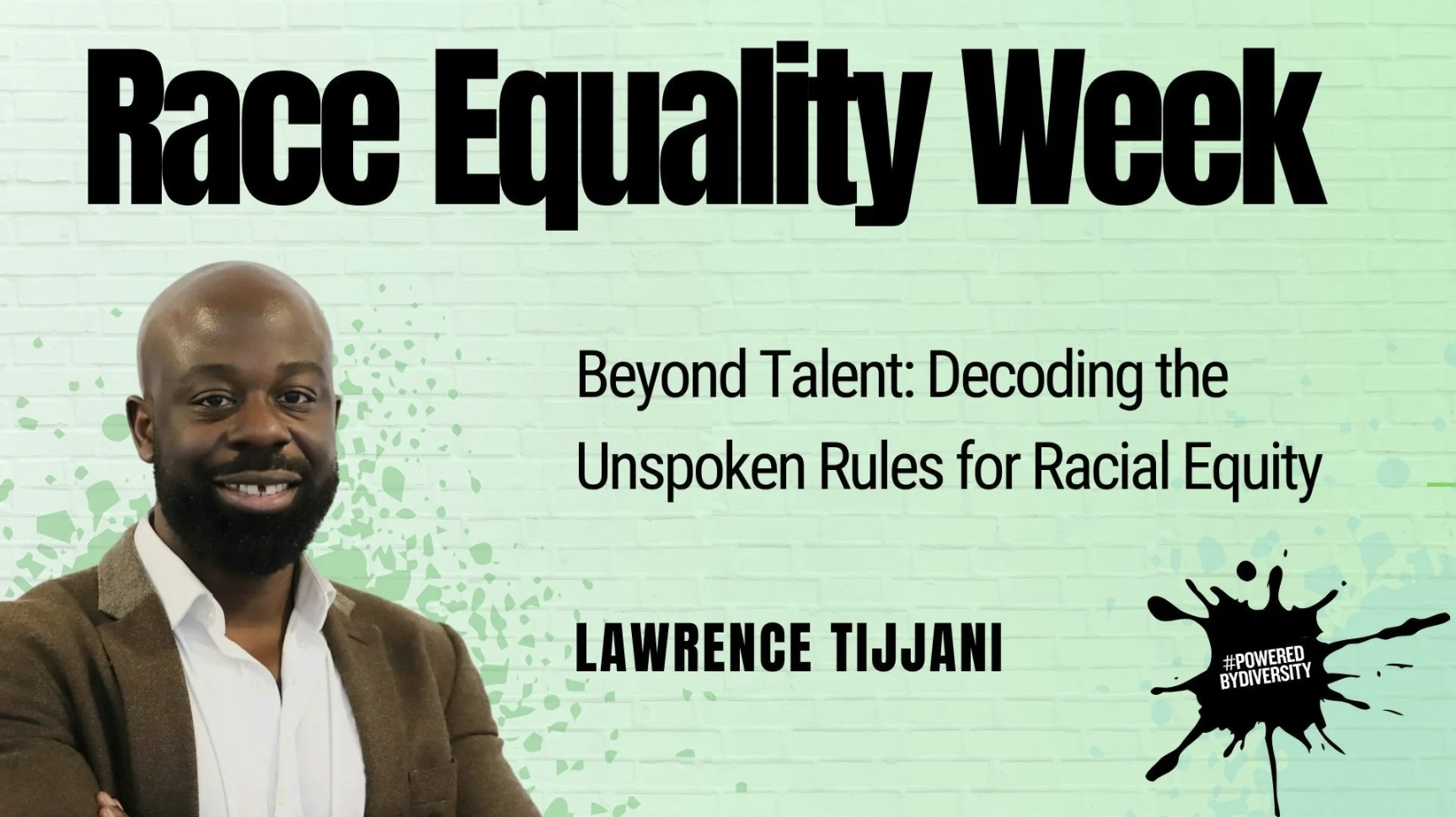
Race Equality Week: Beyond Talent: Decoding the Unspoken Rules for Racial Equity
Monday 9 February 2026
12:00 13:00
We often say we want to hire the best talent, but what happens when that talent walks through the door?
For many individuals from Black and underrepresented communities, talent isn't enough to overcome the unspoken rules and hidden biases of the corporate environment.
In this session, former educator and social mobility advocate Lawrence Tijjani will explore the 'hidden curriculum' of the workplace that hinders progression. Attendees will learn practical strategies to move beyond mentorship to active sponsorship, create psychologically safe feedback loops, and build an inclusive culture where everyone has the tools to thrive, not just survive.
Not yet a member of Cultural Calendar Club? Join today or Contact Us.