
This Week, Edited: Why Wellbeing Determines Whether We Speak Up or Shut Down
Over the past three weeks, we’ve been exploring wellbeing from the inside out.
Not as a set of habits or a checklist - and definitely not as something “extra” to fit around work. We’ve been looking at what actually shapes how people show up — especially under pressure.
And one pattern has become increasingly clear:
Wellbeing doesn’t just affect how people feel.
It affects whether they speak up, avoid, or stay silent.
How We Feel Coming Back Matters
In the first week of January, we focused on how people return to work — particularly after breaks, transitions, or periods of intensity.
The key insight was simple but powerful:
How people feel returning to work is a stronger predictor of burnout than workload alone.
Energy doesn’t reset because the calendar changes.
Capacity doesn’t bounce back on command.
When pace ramps up before energy has returned, people compensate. They push. They power through. And stress starts to build quietly.
That matters — because stress isn’t just an internal experience.
It shapes behaviour.
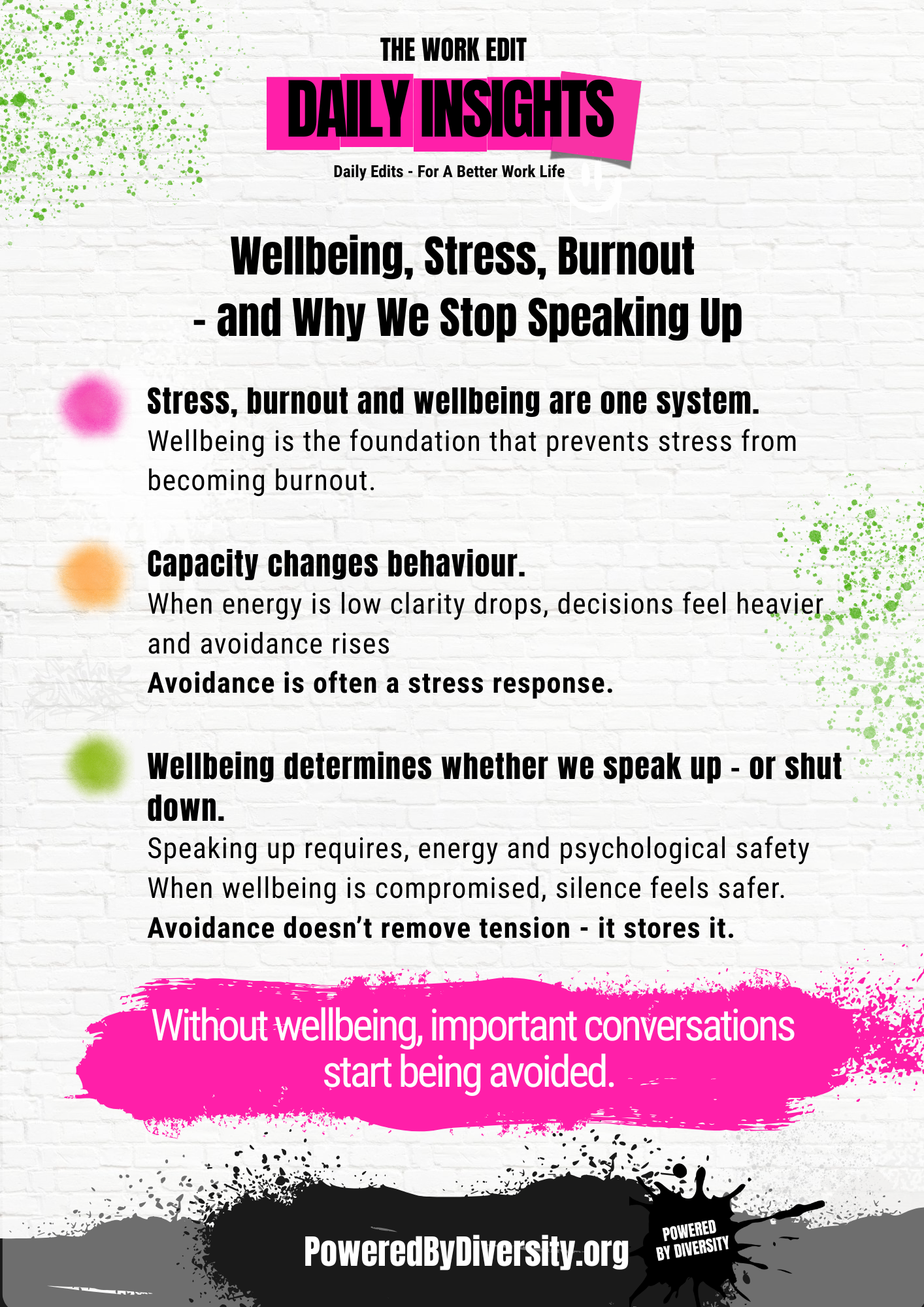
Stress, Burnout and Wellbeing Are One System
Week 2 helped us connect the dots.
Stress isn’t a personal failure.
Burnout isn’t sudden.
And wellbeing isn’t self-care theatre.
We explored how:
Stress is often a signal from the system, not the individual
Burnout is what happens when stress goes unanswered for too long
Wellbeing is the foundation that prevents both
Sophie’s wedding cake exercise made this visible.
Most people are stacking work, responsibility, and care for others on top — while leaving themselves with a thin, unstable base.
Burnout doesn’t come from having too much on top alone.
It comes from having too little underneath to support it.
Capacity Changes Behaviour
This week, we took things one step further and explored what happens after stress builds and before burnout fully sets in.
Low capacity doesn’t just feel uncomfortable, it changes how people behave.
When energy is low:
Clarity drops
Decisions feel heavier
Avoidance increases
People withdraw rather than engage
Avoidance, we learned, isn’t usually apathy or laziness it’s a stress response.
The brain is conserving resources, reducing risk and avoiding additional load.
Seen this way, avoidance becomes information — not a character flaw.
The Missing Link: Wellbeing and Speaking Up
Put all of this together, and something important emerges.
People don’t avoid speaking up because they don’t care.
They avoid it because they don’t have the capacity for discomfort, conflict, or uncertainty.
Speaking up requires:
Energy
Clarity
Psychological safety
A sense that it’s worth the effort
When wellbeing is compromised, those conditions disappear silence becomes easier, delay feels safer and avoidance feels protective.
Which means wellbeing becomes about whether honesty is even possible.
Why This Matters at Work
Many organisations try to address difficult conversations in isolation; feedback training, conversation frameworks, even scripts to follow.
But if people are already stretched, exhausted, or unsure where they stand, those tools rarely land.
Because you can’t expect honesty from a nervous system that’s already overloaded.
Wellbeing isn’t a “nice-to-have” before the real work begins - it’s what makes real work (including honest conversations) possible in the first place.
Where We’re Going Next
Next week, we’ll start exploring what happens when people do have enough capacity — and what gets in the way of using it.
We’ll look at:
Why we avoid necessary conversations
How avoidance quietly creates stress and tension
What changes when clarity replaces silence
Not with sugar-coating but not with confrontation. With honesty, care, and practicality.
Because wellbeing doesn’t just help people cope - it also helps them talk.
🔔 coming up on The Work Edit:
Next week: The conversations we avoid — and what changes when we stop avoiding them.
🔔 Get Daily Insights to your inbox
Cultural Calendar Club
Your calendar of live events for the year.
join today for 12 Months of live, inspiring, entertaining talks events, made financially accessible for all organisations
Not yet a member of Cultural Calendar Club? Join today or Contact Us.
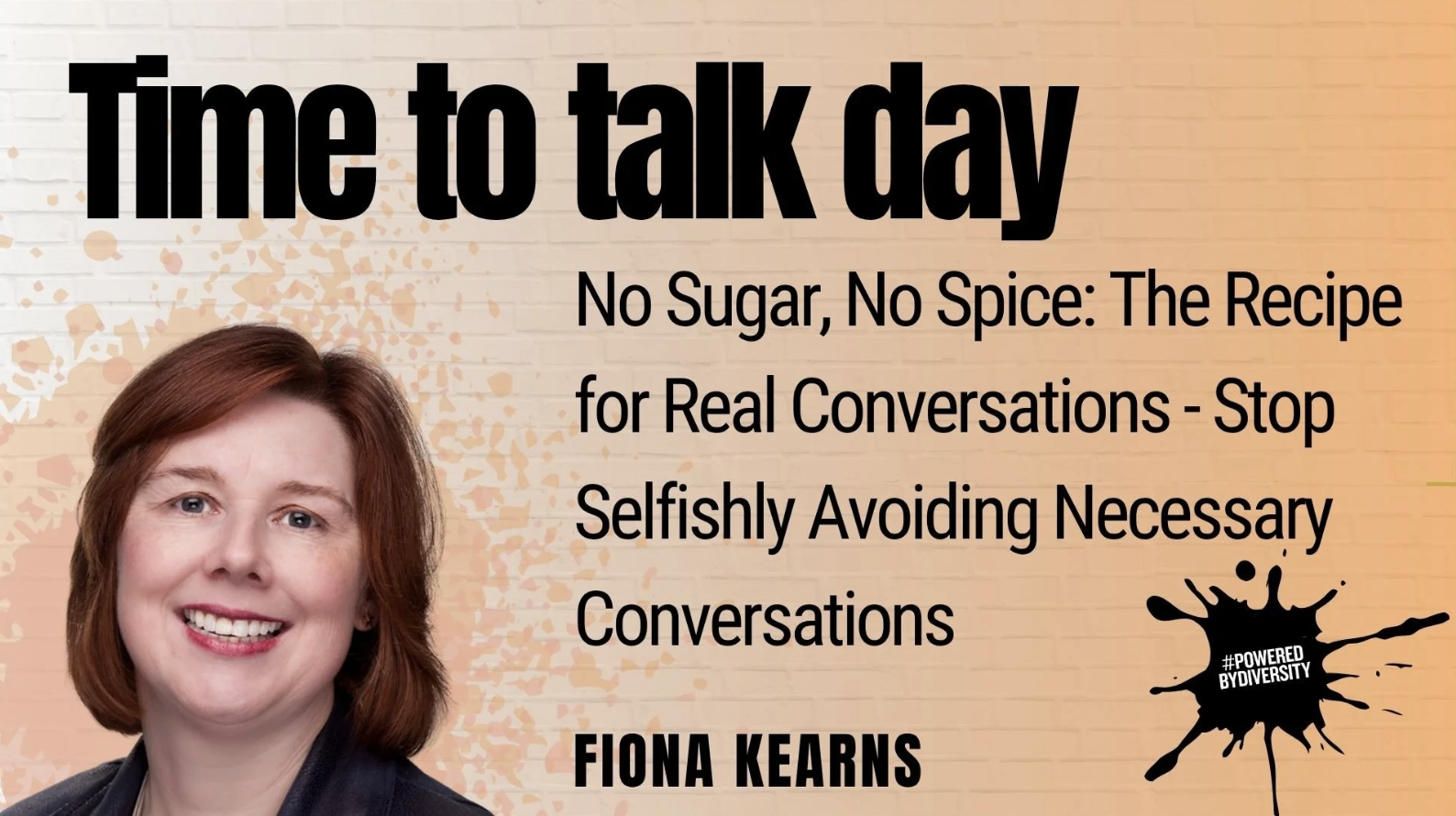
No Sugar, No Spice: The Recipe for Real Conversations
Thursday 5 February 2026
12:00 13:00
You might think avoiding tough conversations makes you kind or considerate. In reality, it’s holding everyone back—including you. Let’s face it: dodging discomfort doesn’t just affect you. It hinders your team and your organisation from reaching their full potential. By avoiding these moments, you deprive your team members of valuable feedback, stall their development, and miss opportunities to strengthen your working relationships.
It’s time to break the cycle. It’s Time to Talk.
In this masterclass, you’ll learn how to face these conversations head-on, adopt a practical and proven strategy, and build stronger, more productive connections.
Not yet a member of Cultural Calendar Club? Join today or Contact Us.