Safety changes when risk is shared.
Sharing risk doesn’t require grand gestures.
It often looks like:
Backing a colleague’s point in a meeting
Asking a question that gives someone space to re-enter
Naming something that others are clearly thinking
Interrupting a pattern that puts pressure on one person
These moments matter because they signal something important: ‘you’re not alone in this’.
Why this matters → (30 sec read)
Across this week, we’ve explored how risk shapes participation.
Who feels able to speak, who hesitates and who carries the silent (yet exhausting) work of constant self-protection.
What often changes that dynamic isn’t confidence training or instructions to “be more assertive”.
It’s shared risk.
When someone else steps in — even briefly — to share the risk, the conditions shift.
for leaders → (30 sec read)
When leaders take the first risk, people notice.
They notice when a leader names uncertainty instead of smoothing it over, back someone’s contribution publicly, pause a conversation before blame takes hold.
People notice when leaders spot who isn’t participating and approach them privately to check in.
People notice when leaders invite feedback on their own ideas - and say thank you afterwards.
These moments matter so much, because they answer a quiet question many people carry:
Will this cost me later?
When leaders show that speaking up won’t quietly change how someone is viewed, participation shifts.
Not because people are pushed to be braver - but because the risk no longer sits with one person alone.
That’s how safety grows.
Through shared responsibility, made visible.
Bringing it all together
Many people care deeply about fairness, and genuinely want to support others.
What they’re often missing isn’t intent, it’s clarity about how their support should show up in real moments.
Sharing risk with someone can provide that support they need.
This week has shown that participation isn’t equally safe.
But it’s also shown that conditions aren’t fixed - we can change systems that aren't working for us.
When risk is shared, silence loosens.
And when silence loosens, work becomes lighter for everyone.
Reflection
Where have you seen risk carried by one person alone this week?
What small action could have helped share that load?
🔔 coming up on The Work Edit:
Tomorrow, we’ll reflect on what we’ve learned about risk, safety, and participation — and why changing conditions is much easier and quicker than changing people.
Want to feel more confident talking about topics like this at work?
the 2026 Diversity Ambassador certification is now open for booking! 🎉
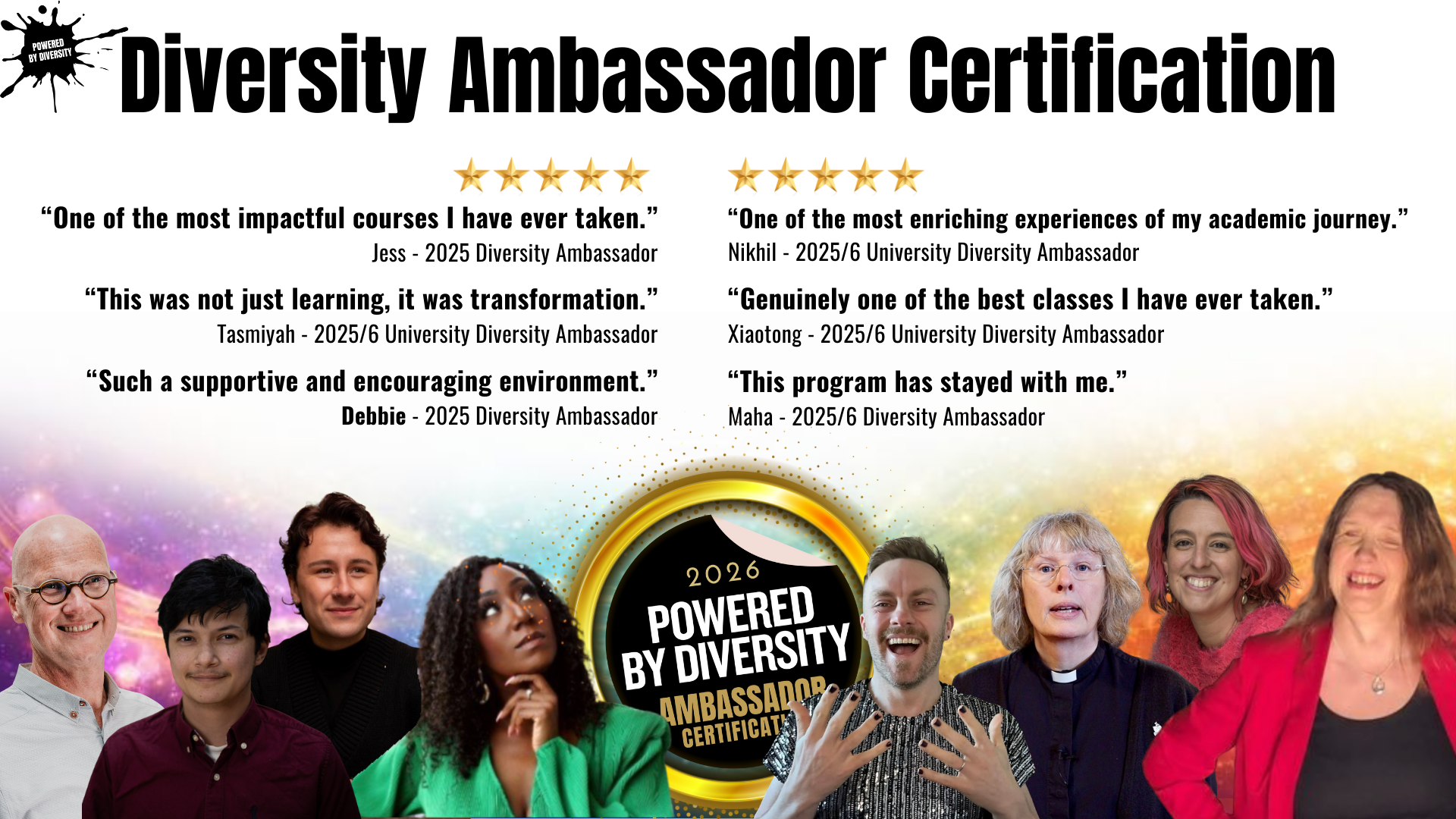
Six classes held via Teams | Every Thursday | from 12 - 1:30pm | From May 7th - June 11th
When are the Classes?
Thursday 7 May, 12-1:30 - Examining Beliefs - Foundations of EDI Thursday 14 May, 12-1:30 - Today's Sex & Equality Landscape
Thursday 21 May, 12-1:30 - Flags, Pronouns & Human Rights Thursday 28 May, 12-1:30 - Talkin' 'Bout my Generation
Thursday 4 Jun, 12-1:30 - Anti-ableist. Neuro inclusive. Access for all Thursday 11 Jun, 12-1:30 - Talking About Race Today
Click here to book your place! (please be aware the cohorts fill up quickly)
You can find out more here or Get in touch for a chat
coming up on Cultural Calendar Club
12 Months of live, inspiring, entertaining talks events, made financially accessible for all organisations
Not yet a member of Cultural Calendar Club? Join today or Contact Us.
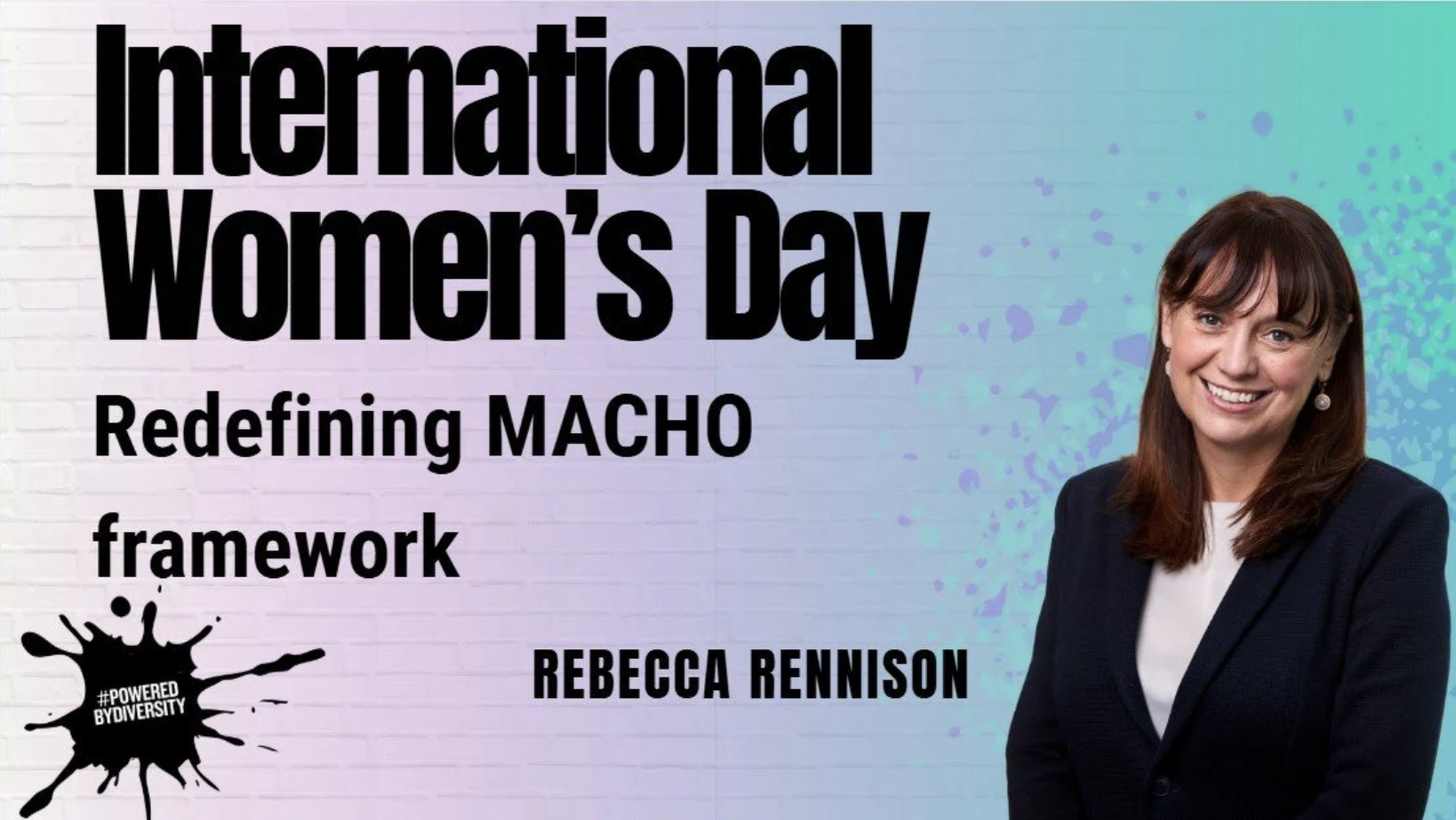
International women’s day
Redefining macho
Monday 9 March 2026
12:00 13:00
Not yet a member of Cultural Calendar Club? Join today or Contact Us.
Rebecca created the “Redefining MACHO” framework to encourage better male allyship and foster a more diverse and inclusive workplace. This framework consists of five simple, actionable steps that everyone can implement today to enhance DE&I within their organisations and the broader business community.
M = Meaningful Mentor
A = Amplify Awareness
C = Capture Confidence
H = Harmony with Home
O = Orchestrate Opportunities
Rebecca will discuss how this framework can unlock numerous small actions that collectively support the development of diverse teams, actively champion equity, and ensure that inclusion is experienced by all. She has conducted several “Redefining MACHO” workshops and events, gathering valuable feedback and real-life examples that provide a clear roadmap for change.
She will also share her “Work Life Harmony Handbook” and “Confidence Boosting Alphabet” to help SMASH Imposter Syndrome.