
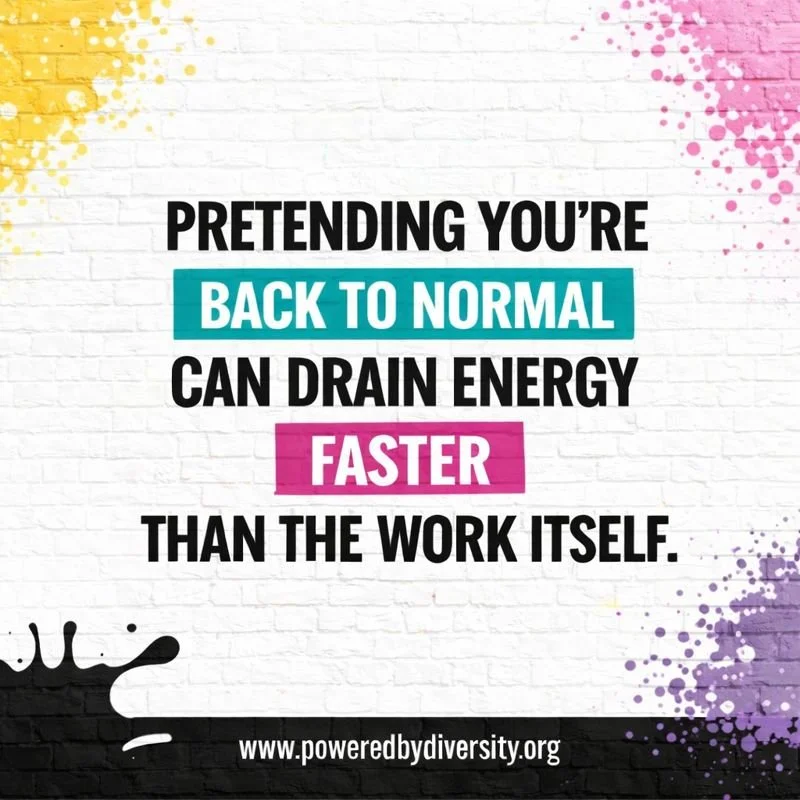
Pretending you’re “back to normal” often drains more energy than the work itself.
Why this matters → (30 sec read)
When expectations jump straight back to full speed, people don’t magically regain energy — they compensate.
They work longer, think harder, and push through fatigue to keep up appearances. That hidden effort costs more energy than the tasks themselves and is one of the reasons January exhaustion can escalate so quickly.
If you’re finding yourself forcing focus or powering through this week, it might not be a motivation issue.
It could be the strain of trying to falsely maintaining a “back to normal” pace - before your system is ready.
Energy recovers faster when pressure drops — not when it’s ignored.
For leaders → (30 sec read)
When people feel pressure to appear fully operational before they actually are, effort becomes invisible — and risk increases.
Teams may look productive while quietly overextending, masking low capacity with unsustainable behaviours. This is often misread as resilience, when it’s actually a burnout risk.
The fastest way to stabilise energy isn’t encouragement to push through — it’s reducing unnecessary urgency, clarifying what truly matters, and explicitly allowing a more gradual return to full pace.
Pressure hides problems.
Capacity reveals them.
One Thing to Try:
Ask yourself today:
“What am I doing to look ‘back to normal’ to my peers and leaders — what can I do to break this cycle with my own team?”
That answer is usually where energy is leaking.
Top Tips: Protecting Energy When “Back to Normal” Isn’t Real
1. Stop performing “fine” if you’re not
Looking OK can cost more energy than the work itself.
If you’re forcing focus or hiding fatigue, that effort is draining you.
You don’t need to explain yourself — just work at a pace that’s real.
2. Question urgency before responding to it
Not everything that feels urgent actually is.
Before reacting, ask:
Does this need doing now — or just acknowledging?
Pausing protects energy more than pushing ever will.
3. Reduce the pressure you put on yourself to catch up
“Catching up” assumes you’re behind — often you’re not.
January overload often comes from imagined expectations, not real ones.
Check what’s actually required before filling the gap yourself.
4. Create one low-pressure space in your day
Even a small pocket of calm helps energy stabilise.
That might be:
A meeting-free hour
A slower task
Time without notifications
Energy recovers when the system gets a break.
5. Let “good enough” be enough (for now)
Perfection drains energy quickly.
Ask:
What’s the simplest version of this that still works?
January doesn’t need excellence — it needs sustainability.
6. Notice where you’re absorbing unnecessary pressure
Pay attention to moments where you think:
I should respond instantly
I need to prove I’m back
I can’t slow down yet
Those thoughts are often where energy disappears.
7. Drop one thing that doesn’t actually matter
You don’t need to overhaul everything.
Just choose one:
Meeting
Task
Expectation
Removing pressure restores capacity faster than adding effort.
The reframe worth keeping
Jan Energy isn’t lost because you’re doing too little.
It’s lost when you’re doing too much — too soon.
🔔 Tomorrow on The Work Edit:
Energy, capacity, and why “back to normal” is a myth.
Cultural Calendar Club
Your calendar of live events for the year.
join today for 12 Months of live, inspiring, entertaining talks events, made financially accessible for all organisations
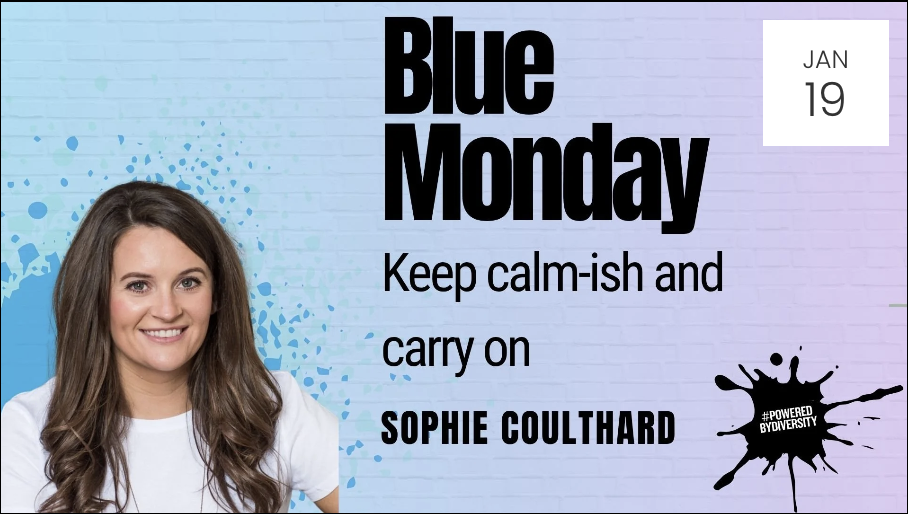
Blue Monday: Keep Calm-ish and Carry On
Monday 19 January 2026
12:00 13:00
Beat the Blue Monday slump with a practical, uplifting session focused on building real resilience and confidence for the year ahead.
Join wellbeing specialist Sophie Coulthard for an energising virtual workshop packed with simple strategies to help you reset, refocus, and feel more in control. You’ll explore how to manage pressure, shift unhelpful thinking, and support your own wellbeing, as well as those around you.
Whether you're already flagging in the new year or just want to start 2026 feeling steady and strong, this session is a great way to press pause and build momentum.
Not yet a member of Cultural Calendar Club? Join today or Contact Us.