
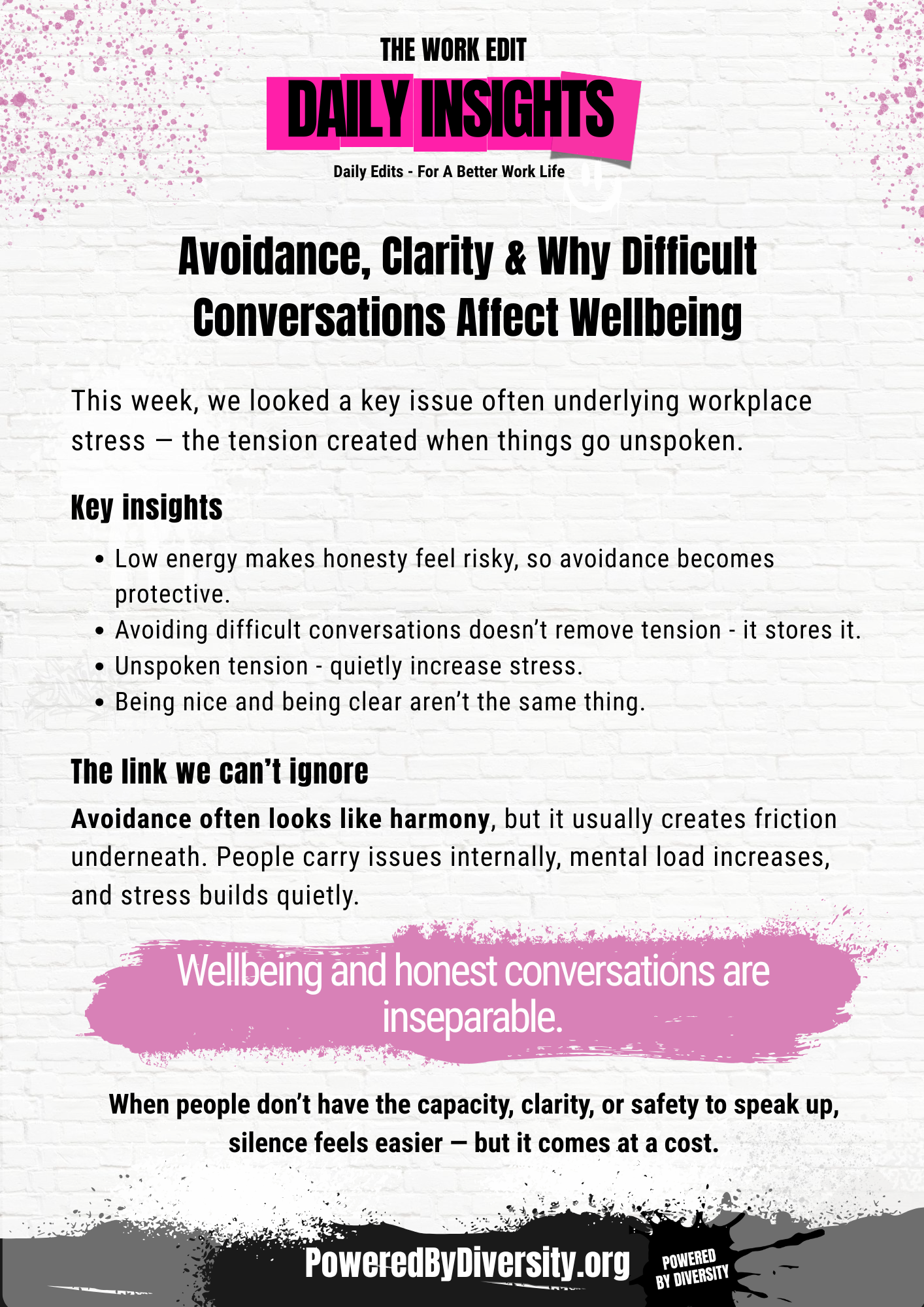
This Week, Edited: Avoidance doesn’t reduce stress. It relocates it.
Why this matters → (30 sec read)
Over the past week, we’ve looked at avoidance from a few different angles.
Not as a flaw.
Not as weakness.
But as a response.
Avoidance often shows up when:
energy is low
clarity is missing
tension feels risky to address
It can feel easier in the moment to stay quiet, delay, or let things slide.
But what’s avoided doesn’t disappear.
It turns into background stress — the kind that sits in your head, drains energy, and makes work feel heavier than it needs to be.
Speaking up isn’t about being confrontational.
It’s about reducing the cost of silence.
For Leaders → (30 sec read)
This week highlighted a pattern many workplaces recognise but rarely name.
When clarity is missing and tension goes unaddressed:
people second-guess themselves
misunderstandings grow
stress increases quietly
Avoidance can look like harmony — but it often creates friction underneath the surface.
Clear, timely conversations don’t just resolve issues.
They reduce mental load, protect wellbeing, and restore momentum.
Avoidance delays resolution.
Clarity releases pressure.
Stress, Burnout and Wellbeing Are One System
This week, we explored why avoidance is so common — and so costly.
We saw that:
avoidance stores tension rather than removing it
being “nice” can delay clarity
unspoken expectations (including relational ones) quietly increase stress
low energy makes speaking up feel risky
Put together, these insights point to something important.
Many of the stressors people carry at work aren’t caused by the work itself.
They’re caused by what isn’t being said.
Silence becomes a coping strategy when people don’t feel they have the capacity, safety, or clarity to speak.
That’s why wellbeing and honest conversations are inseparable.
You can’t separate how people feel from how they communicate.
And you can’t expect clarity where avoidance feels safer.
reflection
What might feel lighter for you if it didn’t have to be carried silently?
🔔 coming up on The Work Edit:
Next week, we’ll focus on what happens when people do decide to speak — and how to have necessary conversations without sugar-coating or unnecessary conflict.
🔔 Get Daily Insights to your inbox
Cultural Calendar Club
Your calendar of live events for the year.
join today for 12 Months of live, inspiring, entertaining talks events, made financially accessible for all organisations
Not yet a member of Cultural Calendar Club? Join today or Contact Us.
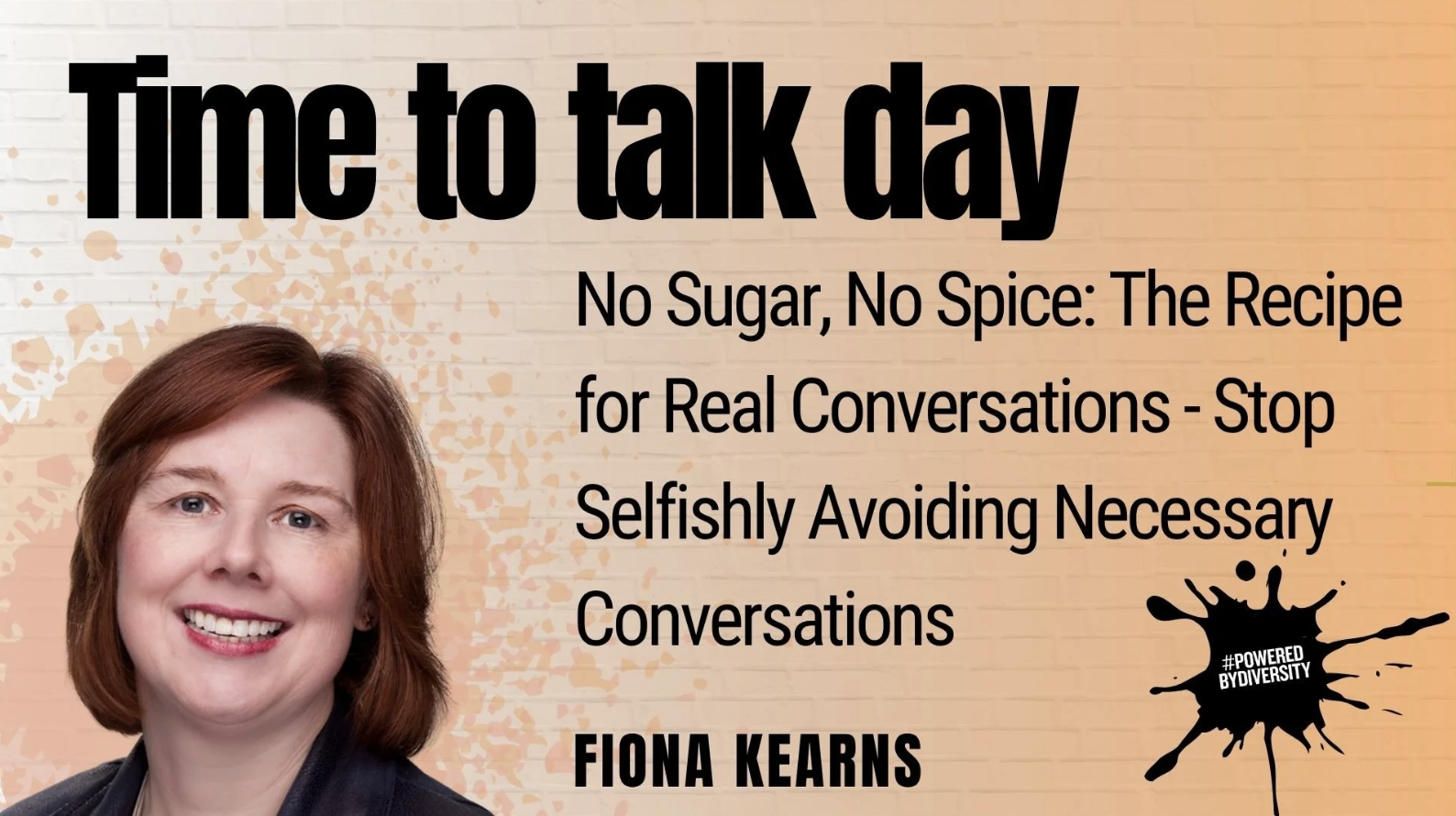
No Sugar, No Spice: The Recipe for Real Conversations
Thursday 5 February 2026
12:00 13:00
You might think avoiding tough conversations makes you kind or considerate. In reality, it’s holding everyone back—including you. Let’s face it: dodging discomfort doesn’t just affect you. It hinders your team and your organisation from reaching their full potential. By avoiding these moments, you deprive your team members of valuable feedback, stall their development, and miss opportunities to strengthen your working relationships.
It’s time to break the cycle. It’s Time to Talk.
In this masterclass, you’ll learn how to face these conversations head-on, adopt a practical and proven strategy, and build stronger, more productive connections.
Not yet a member of Cultural Calendar Club? Join today or Contact Us.