
Stress Isn’t a Personal Failure. It’s Often a System Problem.
If stress at work has ever been framed as something you need to manage better, you’re not alone.
“Breathe!”, “be more resilient” and our personal favourite “you just need to prioritise”
Whilst none of that is inherently bad advice, it is incomplete, because stress doesn’t just come from what’s happening inside you.
It often comes from what’s happening around you….
Why this matters → (30 sec read)
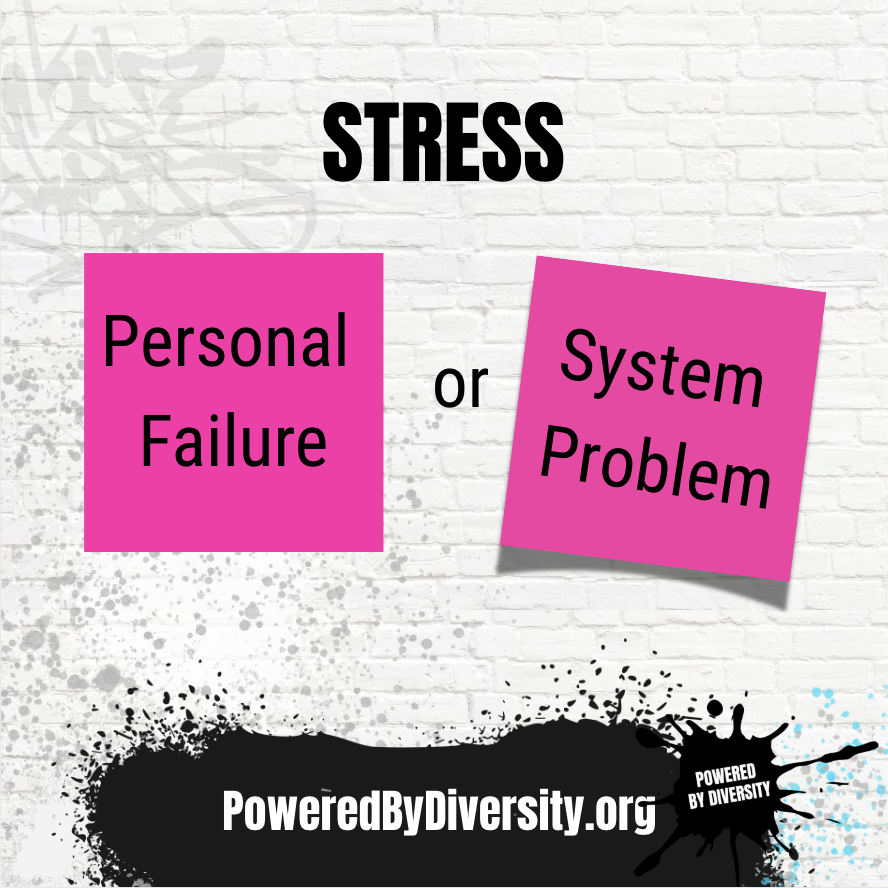
When stress is treated as a personal problem, the solutions become personal fixes.
But many of the things that make work stressful sit outside of our control:
Unclear expectations
Constant urgency
Lack of recovery time
Pressure to perform without pause
No amount of breathing or green juice fixes that!
If work feels stressful, it doesn’t mean you’re failing.
It’s more likely the system you’re working in is asking a lot, without enough clarity, control, or tolerance for recovery.
That’s not a weakness.
It’s information.
a Question to ponder Today
What part of my stress is actually about the system I’m working in — not my ability to cope?
That answer is usually where change starts.
For leaders → (30 sec read)
When stress is framed as an individual issue, responsibility quietly shifts away from the system.
But sustained stress is rarely about personal resilience alone.
It’s about misalignment between expectations, pace, and capacity.
Reducing burnout risk doesn’t start with telling people to cope better.
It starts with:
Clearer priorities
Fewer competing demands
Predictable pace
Built-in recovery
When systems improve, stress reduces naturally — without requiring heroics.
What We Get Wrong About Stress
A lot of workplace wellbeing advice starts with the assumption that stress lives inside people.
So the solutions focus on:
Individual resilience
Self-care routines
Stress management techniques
Those things can help — but only up to a point.
Stress becomes damaging when:
Pressure is constant
Expectations are unclear
Pace is relentless
Recovery is treated as optional
In those conditions, asking people to “cope better” just adds another layer of pressure.
Why Systems Matter More Than Motivation
People don’t burn out because they don’t care enough, they burn out because they care for too long without relief.
When systems are poorly designed, people compensate: They stay switched on, they absorb urgency, they push through fatigue, they mask stress.
That effort is invisible — until it isn’t.
Stress isn’t a sign that someone needs fixing.
It’s often a sign that something in the system needs adjusting.
What “Wellbeing” Actually Looks Like at Work
Real workplace wellbeing isn’t glamorous.
It shows up as:
Clear priorities
Realistic timelines
Fewer false emergencies
Permission to pause
Time to recover
It’s not something you bolt on after work, it’s built into how work is structured in the first place.
If wellbeing advice has previously felt exhausting, patronising, or unrealistic — that’s not on you.
It’s probably been missing the point.
🔔 Tomorrow on The Work Edit:
Wellbeing explained by expert Sophie Coulthard (with a little help from The Chemical Brothers…)
Cultural Calendar Club
Your calendar of live events for the year.
join today for 12 Months of live, inspiring, entertaining talks events, made financially accessible for all organisations
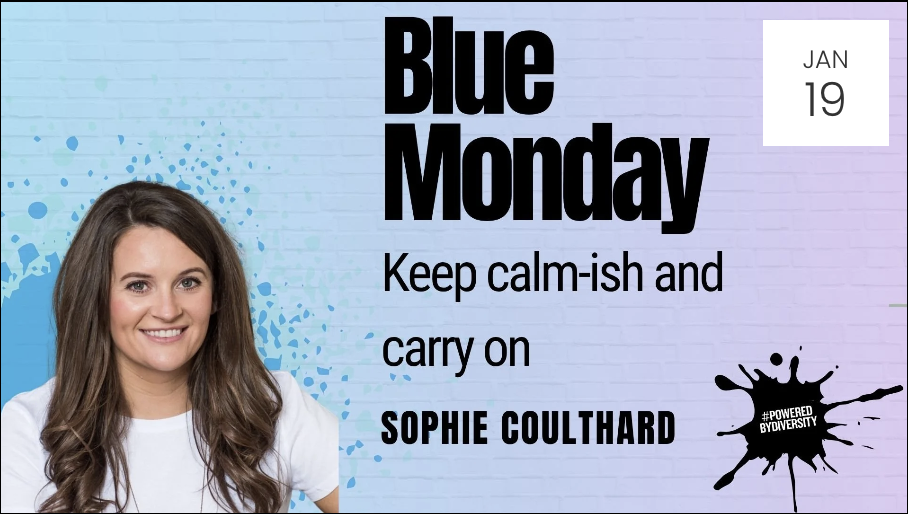
Blue Monday: Keep Calm-ish and Carry On
Monday 19 January 2026
12:00 13:00
Beat the Blue Monday slump with a practical, uplifting session focused on building real resilience and confidence for the year ahead.
Join wellbeing specialist Sophie Coulthard for an energising virtual workshop packed with simple strategies to help you reset, refocus, and feel more in control. You’ll explore how to manage pressure, shift unhelpful thinking, and support your own wellbeing, as well as those around you.
Whether you're already flagging in the new year or just want to start 2026 feeling steady and strong, this session is a great way to press pause and build momentum.
Not yet a member of Cultural Calendar Club? Join today or Contact Us.